Pages

Showing posts with label interview. Show all posts

June 15, 2010

Roar of Raavan


Abhishek Bachchan on being Beera in the modern-day adaptation of ‘Raavayan’

Everyone’s been waiting so eagerly for Raavan... How have you been feeling in the run-up to the release?

I have just come back from an outdoor. (Abhishek was shooting for Abhinay Deo’s thriller Game in Greece and Turkey.) So all this buzz is just sinking in, you know. But I am definitely excited because everyone’s worked so hard on the film and we have given it our best. We can’t do much more than that. I am very, very happy with the film. It’s really turned out very well. Mani is fantastic in the film... he is in top form and yet again he has given me a memorable character. I have no complaints whatsoever.

When Mani Ratnam offers you a film, do you ever ask for the script or just blindly say ‘yes’?

The way it happens is that whenever Mani is ready to make a film, he would just call me and ask: “Are you on?” and that’s it. We take it from there. I never ask him for a script. I trust him implicitly... my bond with him is beyond that of an actor and director. He is family to me. And he just has to order and I will be there. It’s as simple as that.

How does it feel to be Mani Ratnam’s hero? He has never repeated a Bollywood star and you are doing his third film on the trot...

I am very proud. I can proudly say that I have done three films with the Mani Ratnam. I am very honoured and humbled at the same time. Of course, there’s a lot of responsibility. When this great man is bestowing so much faith on you, you shouldn’t let him down. I sincerely hope that. Every day at the end of shooting, I would ask him, I did okay today, naa? And he would turn around and say: “You did okay but did I do okay?” I would say, “Come on man, you are Mani. You shouldn’t be asking that!” (Laughs out loud.) I am so happy when I work with him. I believe he is the best in the business.

But you did say no to the Tamil version Raavanan...

In fact, I had said ‘yes’ at first! Mani had bullied me into doing it initially. But then I went and pleaded to him. I told him... look Mani, I would love to do this and you know I would do it for you, but the fact is I don’t know Tamil! And I don’t want to be in a situation where I am panicking about just learning my lines and doing the role without any proper feel of the emotions. I have Beera which is a complex enough character to play and I want to concentrate on that. He understood that.

When did he first share with you the idea of Raavan?

I was shooting for Delhi-6 in Jaipur when he called me one day. And he asked: “Should we do it again?” I was like, do what? And he said: “Should we make another film?” I said, of course... I was waiting when you are going to call me. He told me about the idea of this one guy and the basic story. I asked, have you thought of a title for the film? And he said, Raavan. I thought it was fantastic... the whole project was appealing from the word go. Working in a Mani Ratnam film is a big thing in itself and to play a character like Beera is just amazing.

What makes Beera so special?

I really believe Beera is going to be memorable. He is really loveable. Although at first he looks intimidating and evil and mad and wild and almost animal-like, but once the film carries on, you will start liking him. He is very interesting.

Is Beera Munda based on Birsa Munda the legendary tribal leader? Or is he a Maoist leader as has been speculated widely?

Not at all! It is absolutely not inspired from any Maoist or Naxalite leader. He is a completely original character. In central India Beera is a very common name. It’s just a name.

So how did you create Beera?

As Mani and I have always done. We sit down and flesh out the character. We do a lot of work on the characteristics before we get onto the floor... from the way he talks to the way he walks from the way he looks to the way he dresses. I look upon Beera as the purest character in the film. In life, there is a grey shade to everything. What I love about Beera is there is no grey. There is only black and white. You are either good or bad. If you are good, he will give his life for you. If you are bad, he will take your life. I like his clarity... that’s the purity in him and that’s why you start liking him. You realise at heart he is a very correct person.

Are you in a position to rate Beera vis-a-vis Lallan (Yuva) and Gurukant Desai (Guru)?

I would like to believe it’s bigger and better. If it’s not then Mani and I have failed as a team. When we were making Guru we were very conscious of doing something totally different from Lallan Singh... something which could top Lallan. And when we did Raavan, we wanted to top Guru. Otherwise why would you work together if you can’t outdo what you did last?

The analogy with Ramayan... how much of it is obvious or is it entirely subtextual?

Everybody says it’s from Ramayan but I say no, it’s the Raavayan! I really believe that in our films we have always borrowed from our scriptures. No matter which film, you will always find some angle because our scriptures are so vast and so in-depth. You will always find a jhalak of them in our work. And I don’t think Raavan is any different. It is a modern-day story with wonderful characters and if people draw parallels to Ramayan, go ahead! I am not going to say no it’s not. I do believe Mani is inspired... but not just from Ramayan... from a lot of things.

Did Aishwarya come on board as Sita after you became Raavan?

She came on board almost immediately. When Mani first spoke to me, he did mention that he wanted to take Aishwarya in it. I thought it would be cool and I said, of course! I think the very next day he spoke to her. With Aishwarya and me, there’s no question of saying ‘no’ to Mani. He is too special. He launched Aishwarya in Iruvar. So, he is very close to both of us.

Aishwarya had turned down Dostana because she wasn’t comfortable playing a character being pursued by you. There were no such concerns with Raavan?

No, never. Once you see the film you will understand how our two characters work in the film. And if I tell you now, you won’t enjoy the film. Dostana was a different kind of film. The entire dynamics between Aishwarya and me in Raavan is absolutely amazing! It’s something very unique and it’s something never been done before.

Finally, do you remember your brief Calcutta shoot for Raavan?

Of course! I only shot there for two-three days this time. Calcutta is always fantastic to come to. You know what I think about Calcutta. It always holds a special place in my heart and to come back there with Mani after Yuva was that much more special. The best thing was we actually got some time to sneak away and rush to Victoria Memorial and have phuchka quietly and run back!

Pratim D. Gupta

http://www.telegraphindia.com/1100616/jsp/entertainment/story_12568831.jsp

June 7, 2010

My image has changed after two hits: Sajid Khan


With both his films, Heyy Babyy and Housefull, declared super hits, anchor-turned-director Sajid Khan feels he might have outgrown his image of the funny-guy-next-door and may not be able to fit the comic host role any more.

"Success is a very important thing. Till now people perceived me as a friendly anchor, a compere who used to crack jokes, a boy-next-door kind of a person. But after my directorial ventures, my image has changed. In fact, I feel I won't be able to fit in that comic, host image now," Sajid told IANS in an interview.

Known as the comic host of TV shows like Ikke-Pe-Ikka and Sab Kuch Ho Sakta Hai and various award ceremonies, Sajid received acclaim as a full-fledged director for his 2007 venture Heyy Babyy. It featured Akshay Kumar, Riteish Deshmukh, Fardeen Khan and Vidya Balan. Shah Rukh Khan was seen in a special appearance in the movie.

He followed the success of his debut film with the 2010 hit Housefull, again a multi-starrer. He repeated Akshay and Riteish along with Arjun Rampal, Lara Dutta, Deepika Padukone and Jiah Khan.

"I am at the scripting stage of my third film," said Sajid, brother of choreographer-director Farah Khan.

When asked whether his third film will also star Akshay, the 38-year-old said: "I would love to take Akshay in the film, but right now I can't confirm because this film is just at its scripting stage right now."

With two back-to-back hits, Sajid believes good film stars are as important as a good script.

"Script and star cast - both are important for a good film. Today is the age of packaging, if you package your product well and if you have star power in it, it gets more viewers," he said.

After humorous films, can the audience expect a dark, action thriller from Sajid?

"I follow what is a hit at the box office. I want to provide full entertainment to my audiences because I know that's what is liked. So I really don't know whether I will be able to make a film like that or not.

"I believe that children are a very important part of film viewing. It is the children who take their parents or other family members to watch the film with them. So I make films that interests the whole family," he told IANS.

Along with his directorial work, Sajid has donned another hat too -- this time of a judge. He will be seen judging the second season of the reality show India's Got Talent along with Kirron Kher and Sonali Bendre on Colors.

"I was offered two-three reality shows while I was shooting for Housefull, but that time I was busy. But when Colors offered me this show, I got interested and took it up," said Sajid.

"My focus in the show will be to bring out the most unique talent in the show and I will say whatever I feel. I won't manipulate my words," he added.

June 6, 2010

The Reluctant Hero - Hrithik Roshan

Something in him has changed. In place of the jovial boy is a dark brooding man. But Hrithik Roshan continues to see life as a beautiful journey. 
 

He reached for it like a desperate man, clutching at straws. That was Hrithik Roshan’s reaction when he first heard the script of Kites. “I jumped at it, on my crutches,” he says. For five dark months in 2008, Hrithik grappled with crippling knee pain. On long, sleepless nights, the 36-year-old brooded over whether he should quit acting. “Science had given up on my knee. I was heartbroken. Kites pulled me up.”

Hrithik’s labour of love, Kites, released on 21 May to lukewarm reviews and mixed audiences. On public forums like Twitter and Facebook, viewers ranted against the film’s haphazard execution. On the Friday it opened, the star defended his film on Twitter, posting, ‘To all the people who didn’t like Kites n stated that with honesty n love—I’m PROUD to have u as my fans.’ Hrithik also sent ‘understanding’ to those who hated the movie with a vengeance.

The star was quoted saying that if he couldn’t “dance or jump around”, he didn’t want to be an actor. Surely there is more to acting than that? “Yes,” he says, “In fact, I’m playing a paralysed man in Guzaarish (directed by Sanjay Leela Bhansali). I don’t think you get the scope of my knee problem. I couldn’t get up from my chair without the help of my hands. How could I look like a fit, strong character? I would have had to compromise on the spirit of my roles, even my walk. I didn’t want to act if I didn’t have the spirit.”

Hrithik Roshan has always been passionate about acting. There have been no walk-on parts for the sake of friendship. After his first brush with stardom, he hasn’t signed films in a frenzy just to prove something to his audience. As a film journalist, you interview Shah Rukh Khan and Salman Khan perhaps twice a year. Akshay Kumar does five movies a year and that much pre-publicity. The last three Christmas seasons, there have been journalists at Aamir Khan’s door.

Hrithik, in comparison, has had nearly two-year gaps between his films (he has done only 15 in the lead role since Kaho Naa Pyaar Hai in 2000, and the figure would have been much smaller if it were not for the blitz that followed his extraordinary debut). Meanwhile, Ranbir Kapoor has caught on Hrithik’s heels. At the time of filing this story, Hrithik has about 224,000 followers on Twitter, somewhat modest by the standards of his contemporaries. And there are regular complaints that he does not tweet enough.

Is Hrithik a reluctant superstar? “Superstardom is a waste of time,” he says, “There’s no truth in that. When your ego fills up, your creativity is switched off. I follow my instincts and look at where it’s got me.”

In 2008, before the release of Jodhaa Akbar, when we met at his Juhu home, he wore a sunny attitude. He was just back from shooting a commercial in Goa. At the time of Krrish in 2006, he gamely joked about being a superhero while a grey Persian cat walked gingerly around us. This interview, though, is going to be different.

I’m ushered into a room with an overpowering painting of his wife Sussanne and him, his green eyes staring at you from the frame. ‘Baba’ has gone for a haircut, say his staff. Hrithik eventually walks in wearing a black T-shirt. The mood is somewhat sombre.

He has been a subject of intense speculations—an affair with Kites co-star Barbara Mori, Sussanne walking out on him, a fall-out with his father that caused him to leave home, wild partying, alcohol, drugs, his disapproval of his sister Sunaina’s remarrying. Didn’t it worry him, the damage such rumours could do to his image? After all, he perhaps has the largest fan base among children in the country. “In fact, this is the best lesson I could teach children—don’t react. Live with dignity. Don’t get provoked. After all, on a macro level, it’s things like these that cause wars.”

Hrithik says the drugs and partying allegations stuck to him because of the wild, dishevelled appearance he cultivated for Guzaarish. His hair was a crazy, unruly mop, his face hidden behind a beard. Does he miss that look? It’s a teasing question, looking for some humour in a guy who once sportingly showed a flash of his secret buzz cut (for Lakshya) from beneath a baseball cap. But this Hrithik is more serious, he doesn’t take the bait. “I miss every character. I feel lost that I may never meet that guy again. For seven months, I looked through the eyes of a dying man. Nothing matters. There’s so much pain and suffering; you have to spread love.”

Hrithik knows pain. His sister Sunaina fought a protracted battle with cancer and has said that her younger brother helped her pull through. His knee problem has persisted for a few years. “One day, the 20,000 remedies I’d tried converged on my knee. It’s like God felt I’d paid my price,” he says with a smile. Can he play with his kids now—four-year-old Hrehaan and two-year-old Hridhaan? “I have to warm up my knee; then I can play Spiderman. I have my hands full. Two boys can do a lot of damage. But they have such pure energy; they connect to the child in me.”

As a boy, Hrithik was extremely shy. There is an incident that his uncle and music composer Rajesh Roshan told a film magazine. Back in 1979, Amitabh Bachchan was in a studio to record the song Mere paas aao for the film Mr Natwarlal when his eyes fell on five-year-old Hrithik in the chorus. “What an angelic child,” Bachchan is said to have commented in his baritone, walking up to the boy. “I got so frightened, I ran all the way home,” says Hrithik grinning.

He had an uneven childhood. A film industry child, he attended birthday parties with Farhan Akhtar, Karan Johar and Uday Chopra, went to school in the same car as Abhishek Bachchan and stood in as Ranbir Kapoor’s babysitter. “Ranbir’s peed on me,” he had once told me, laughing, “Our parents went on holiday together and I used to carry him around. He used to cry a lot.”

But with his father’s patchy career, Hrithik also saw failure from very close. So he knows the value of striving. As a terribly shy child with a stammer, he practised his speech in front of a mirror. When he wanted to develop a physique, he took tips from Salman and worked hard on the goal. He assisted his dad on Karan Arjun and Koyla. It set the base for one of the most enduring friendships between any two A-list stars—Shah Rukh Khan and Hrithik. In a recent interview, Shah Rukh introspected over how he never felt as insecure as he did when Hrithik became a sensation with Kaho Naa Pyaar Hai. Hrithik says, “There was no reason for the insecurity. Shah Rukh was vulnerable then and people were rude and disrespectful to a man who had entertained us for ten years before I came on. Things didn’t change inside me. I couldn’t stop liking my best friend. Now we can laugh about that.”

With Kites, he believes he is poised for a turn in his career, ready for big risks. The film’s US version has been edited by director Brett Ratner (Rush Hour series, X-Men: The Last Stand). There is Hollywood buzz around Hrithik after reviews like that of The New York Times film critic Jeannette Catsoulis, who wrote, ‘Mr. Roshan requires viewing uncut: writhing on the dance floor or just gazing into space, the man was made to drive women crazy, one movie at a time.’ Back home, as Rakesh Roshan works on the sequel to Krrish, Hrithik is shooting Zoya Akhtar’s road movie Zindagi Milegi Na Dobara with Farhan and Abhay Deol, and he has Guzaarish lined up for release later this year. Also, he is a prospect in Shekhar Kapur’s futuristic water politics story Paani. “I was supposed to be launched by Shekhar 12 years ago in Ta Ra Rum Pum with Preity (Zinta),” he says. Last year, Hrithik made the unusual choice of playing the role of the narcissistic, opportunistic star Zaffar Khan in Luck By Chance. “People asked me why I wanted to do this negative character. I’m an actor. You have to be negative sometimes,” he says.

The actor describes himself as naïve, a dreamer. A man whom fame cannot change. “I hear the roars and shrieks when I go on stage to perform, but I can’t fill my ego up with that. I see it as a pat on my back and I move on.”

May 27, 2010

"Audience acceptance came quite a bit before I got my industry acceptance" - Katrina Kaif


Bollywood correspondent DEVANSH PATEL chats to Katrina Kaif about the most challenging role of her career - Rajneeti, a film about politics and more

WHEN you meet Katrina Kaif, you do not become speechless but you do start to have problems with your speech. At 11am I am scheduled to meet her. I arrive on time. She doesn't. Not to worry. It is 11.30am by the time she arrives and the first thing she does is apologise.

That is something of a worry. What do I say? That is when you go speechless.

Then after looking at her for half an hour in a closed room you start experiencing speech attacks.

Instead of David Cameron, the Prime Minister, you say James Cameron.

That is exactly what happens when you are face-to-face with this beauty that cannot be described in words, poetry and art.

Kaif could have had little idea quite how much it would change her life when she entered the Indian film industry, and for the rest of us, like me, when we actually see her in the flesh.

She walks in without a smile. She has a bad headache with things not going her way. She orders her favourite green tea, sips it and then sits on the couch.

Q: As you play a politician, did speaking in Hindi publicly ever become an obstacle?

A: All languages make you grow as a person. It's not that I came from England to India. I was born in Hong Kong and then went to Japan, China, France, and so on. Before I was even 12 years old, I had travelled to 16 countries. The more you see in life, the more aware you become. I am more confident and understanding of the Hindi language and its importance. Rajneeti has polished my Hindi a lot.

Q: So is Katrina Kaif being redefined here?

A: (Laughs) I don't want to be redefined. If I say I want to redefine myself, then that would mean I am not giving respect on the appropriate amount of recognition and gratitude to every person in this country and the non-resident Indians in England who see Hindi films and who have made me successful. I cannot deny that the Hindi film industry has supported me and is supporting me. Audience acceptance came quite a bit before I got my industry acceptance.

Q: Brief us a bit about Prakash Jha, the director of Rajneeti.

A: All his films are rooted in an Indian flavour. He comes from a grass roots level - a very intellectual circle. He comes from this world of politics; not politics where you are sitting in the Lok Sabha (the lower house of the Indian Parliament). He comes from the local constituencies. He knows them because he has been there. He knows north India inside out. He knows the Indian political system and that is what his films reflect, the kind of person he is. Rajneeti is Prakash Jha's most complete film.

Q: Is Rajneeti too intellectual a film? A: Rajneeti isn't for 70 or 30 per cent of audiences, it is for 100 per cent of audiences. There are very few films that are rooted in the culture of India.

Rajneeti falls into that bracket and any film that showcases Indian culture will entertain audiences. Prakash has that reputation. His films are urban as much as they are rural. I am a fan of Prakash and it came as a shock to me.

Q: It is tough to win over UK audiences who love commercial films rather than going to watch one like Rajneeti, which deals with politics.

A: I think the UK audiences are looking for films that are true to India because most of the people who are going to see Hindi films are the ones who really love India, who have lived there for quite a bit. The non-resident Indians tend to have an even stronger love and fondness for their country than some of those who reside in India. They always want to see their country and cinema being represented fairly and respectfully. Most of the films I've done with Akshay Kumar have been hugely successful in the UK, irrespective of their genres. In terms of Rajneeti, it's something that we'll have to wait and see because the film is very rural. I think the UK audiences would like to know what is going on behind the scenes of politics in India.

Q: Are there any politicians you admire?

A: If it sounds very farcical and very politically correct, the only politician I look up to is Madam Sonia Gandhi, because she is an Italian who comes to India after her marriage to the then-Prime Minister of India, Rajiv Gandhi, then sees him brutally assassinated by a terrorist and then she fights the system by being a politician. She learned the language of India and as a woman and a foreigner in India, she rose above the men. I say 'men' because India is a very male-dominated country. It's beyond incredible what she has done for India and for its citizens. People can talk all the rubbish they want but to maintain that level of power and to have held on to it, it takes extraordinary courage and confidence.

Q: Does politics concern you at all?

A: I don't watch television. You need to have a basic knowledge of what's going on in your country and who is running your country. Beyond that, whatever interests you, it then boils down to an individual. I don't think you need to watch any political debate or any active political programmes to understand the system and prepare for your role.

Q: How was it wearing a saree in the film?

A:I loved wearing the saree in Rajneeti. I think it is the most comfortable clothing you can wear. I am very good at draping it also. Those were the best days of my life when I was covered in a saree in Rajneeti, on and off set.

"I see myself as an observer of societal equations" - Prakash Jha


A week before presenting “Raajneeti” in people's court, Prakash Jha fields some difficult questions on his biggest film till date.

He is a painter who loves political canvas. “This is for you to judge. I see myself as an observer of societal equations,” says Prakash Jha, whose “Raajneeti” is making more news than the country's realpolitik. Jha laughs, “Main khari baat kehta hoon (I say the bitter truth) and people don't like it. They don't realise that it's in their own interest. I have tried to see the development of democracy in the country without getting judgemental.” Is it possible to touch Indian politics without sullying your hands? “I think it is if your intentions are clear. I don't want to bring down anybody. Here I have drawn from the characters of Mahabharat and have put them in a modern setting,” says the man from Bihar who came to Mumbai to be a painter but changed tracks when one day he visited the sets of Bollywood pot boiler “Dharma”.

It is ironical that the world's most robust democracy rarely finds reflection in Hindi cinema. Once in a while there is an ‘Aandhi' and that is about all. “I can't say about others but I have always found politics relevant and topical. Till now I was focusing on Bihar because I know the state well. ‘Raajneeti' has national dimensions.” This brings us to the biggest controversy surrounding the film: The resemblance of Katrina Kaif's character with Sonia Gandhi. “I never said it. It's a concoction of the media.”

But he was the one, who started the promotion of the film by releasing the stills to the media where the similarity between the two is quite apparent. And when the controversy erupted, he changed the promos. “At first I was introducing the characters, now I am giving a glimpse of the story.” Or was the shift because of pressure from the ruling political party? “I am not facing any pressure. Katrina's character doesn't come from abroad as people are conjecturing. She is playing the daughter of an industrialist. It is my interpretation of Draupadi.” Jha is letting out too much to clear the air! Still he is facing Censor's scissors. Is his past haunting him? “I don't think so but yes there were objections. We were given an ‘A' certificate with cuts by the revising committee. We moved to the Tribunal and it has passed it with ‘U/A' with minimum possible cuts. I am satisfied.”

There is talk about certain members furious about a scene depicting the misuse of electronic voting machines. “It has been cleared now with directions to beep out a few words. But I must say some of the people who were in the revision committee had come with an agenda. They don't know that in an attempt to please their leaders they are actually doing harm to their image. Truth wins after all.”

He admits it is his biggest film. “A big investment has gone into the film and I want the film to do well.” One of the offshoots of the new wave, Jha has come a long way. Once known for searing documentaries and films like Damul where a potent thought was not baked on million bucks and didn't require a publicity storm to make a dent in the mind space. Today he is feeling the corporate pressure. “It is a choice I made when I decided to make Mrityudand. I don't say this was the only way out but something I felt was right in the circumstances,” says the multiple National Award winner.

His critics say “Raajneeti” is his way to get back at the political class, after he failed to find a place in the system. He fought two Lok Sabha elections but failed. “I wanted to be in politics to serve the people but unfortunately I couldn't make it but I am not bitter about it. I have friends in all parties. And as I said I am not passing any judgement on the political class. Like all fields, here also we have different kinds of characters…black, white, grey…and when power and money come into play moral dilemmas surface, sometimes greed takes over. The film is a reflection of it.”

In multi-starrers the challenge lies in balancing star egos with the script and when you have mavericks like Naseeruddin Shah and Nana Patekar and stars like Ajay Devgn and Ranbir Kapoor in one film, the task becomes all the more difficult. “It is indeed difficult but when you work for four years on a script, you don't have to pacify your actors. There is no need for compromises. Also I have a rapport with them and they believe me.” But the range is amazing – from Naseer and Nana to Arjun Rampal and Ranbir Kapoor. “It is all according to the demand of the script. I had cast Ranbir just after ‘Saawariya' when the media had not dubbed him as an actor to watch out for. Rampal was the first actor I signed because I could see a brash young politician in him.” His best praise is reserved for Katrina Kaif. “I was touched by her perseverance to get into a demanding role. The way she worked on her Hindi was beyond my expectations.”

But why did he choose an actress of foreign origin with broken Hindi when she has to play an Indian character…. “Her Hindi is quite straight.” And the attempt to ask for votes in the name of her slain husband? “That's just a coincidence.” The questions remain and Jha expects us to be patient till the release but he is surely not saying goodbye to controversial truths. Next on his agenda is a film on caste reservation.

May 17, 2010

I love making movies: Abhishek


Having a legend for a father and the world’s most beautiful woman as one’s wife could have easily eclipsed the achievements of a lesser man. But Abhishek Bachchan is very much his own person and someone who has clearly arrived as an actor of substance. He is his witty affable self as he chats up with CT.......

Mani and you have a great equation ...
It has got to do with understanding. Mani understands me. He knows what I’m capable of. As an actor, at times, I feel he knows me better than I do myself. He enables me to shed all my inhibitions.

Are you lucky for Mani?
No way! How I can I possibly even think that I’m lucky for Mani? He’s the best in the business. I’m the one who has been lucky and blessed to be a part of three of his films.

Raavan has been a physically and emotionally demanding movie ...
Whenever you’re going to do a Mani Ratnam film, you should be prepared for a challenge. Mani is not the kind of director who’s going to give you a walk in the park. He’s going to challenge you, push you to the edge; he’s going to extract a performance from you that even you yourself didn’t believe you were capable of.

Is there a clear triumph of good over evil in Raavan?
That depends on what you describe as good and evil!

Is Ram evil and Raavan good?
Again, it depends from person to person. Everyone is unique. I personally believe we all have a bit of both.

Quite the prankster ...
I’m not a prankster. I need a comfortable atmosphere when I work. So I keep it cool on the sets.

Suriya has been cast in an RGV film. Who has a greater chance of making it big in Bollywood — Vikram or Suriya?
They both are great actors and both will do very well in the Hindi film industry. They were brilliant together in Pithamagan.

The Bachchans are known to zealously guard their privacy. But of late, you’ve tried to reach out to your legion of fans ...
Mediums like blog and micro-blog allow you to converse directly with your audience. It’s nice to get their point of view. But, that still doesn’t mean that you can’t keep things private. What you post is up to you.

Kareena has said she’d love to do a film with you ...
Kareena was my first co-star. That’s something that I will always hold very dear to my heart. I would love to work with her again.

Lord Jeffrey Archer has you in mind for the cinematic adaptation of one of the stories from his latest book ...
Really? That’s nice. I enjoy his books. They lend themselves to films very well. Would I be interested? Not sure, let’s see ...

You’ve been Paa to him. What next for the father-son duo?
Ha ha... We should allow things to get back to normal for a while now. I don’t think he fancies the idea of me playing Paa to him too much!

Small screen plans ...
I enjoyed TV very much. The game show’s success was like the icing on the cake. I wouldn’t mind doing more TV.

Time to unwind now?
Not really. And I’m not complaining. I love making movies. I love being around creative people. It’s a total high.

Chennai ...
Chennai is one of my most favourite cities in the world. I have great memories here... from my childhood, when we used to accompany my father to his shoots here, and now when I come down here for my films. Some of the happiest times of my life have been spent here. I also have a lot of friends who live here. I’d love to do a Tamil film. It’s a dream of mine. But I’d have to learn the language first.

‘Don’t need another Sunidhi or Sonu’ - Sunidhi Chauhan


On her first television stint, the nation’s favourite singing voice Sunidhi Chauhan tells t2 about life with Indian Idol, her role, expectations and Bollywood the way she knows it.

Being on the judge’s seat for a singing reality show, does it bring back a lot of memories?

There was a time during the audition when I walked up to the stage and could feel the pulse of the place brimming with competition, tension and dreams. I relate with everything around because I was a contestant once and that was a great experience. Now when I see the same spark and passion in these boys and girls it does bring back a lot of memories.

One thing that people mistake is Meri Awaz Suno was not a reality show. It was a singing competition based completely on judges and not votes. I had participated because I thought if I could manage to clear a couple of rounds, I’d get to see Lataji (Mangeshkar)!

How has it changed when you look at it now?

It’s not a game. It’s still a competition, a real one. We’re searching for the best singer jinko sunke log paagal ho jayenge. Yes, because of the voting system, a few good singers are often left behind but we do have the key to bring back someone who we feel deserve to stay in the competition. Don’t worry we won’t let ourselves lose a good singer.

People have been complaining that the show hasn’t been able to find a good playback singer in the last four seasons... so this time that’s what we intend to do. Once we find that voice the grooming will happen naturally.

This time there’s a blind singer on our show who sings so well that her appearance or inability to see makes no difference to her singing persona.

Have you been consciously staying away from reality shows before this?

I can be open about the fact that the shows I had been seeing on television were absolute drama. It had all those elements that are not required in a musical show. The four or five times that I was made such offers I said ‘no’ out of choice. This time I felt like doing it. My other co-judges are not the kind to create scenes to seek attention. I feel that I can be myself. Peoples’ tears, laughter, fights or bonding are also for real.

How has the chemistry been with the other co-judges?

Superb! With Anuji (Malik) it’s a love-hate relationship. With Salim (Merchant) I’ve done so much work that our friendship has only grown stronger. At other times we hardly get to meet or talk except during recordings because of our busy schedule. Now that we’re on this panel, we’re getting to eat, breathe, talk and laugh together all the time. I’m enjoying myself. A lot of disagreements do happen but then we’re three of us who think differently. But our common focus is finding that one voice that will touch our hearts and that’s where we agree.

Anything specific that you’ll be looking for in the contestants?

Not another Sonu Nigam, Kailash Kher or Sunidhi Chauhan. We’re all here and hope to stay on for another 50 years. No one should try to stand out by emulating their idol. Why would we want another heard voice. I hope someone can race ahead on the strength and style of their own singing.

Is Bollywood still as welcoming for you as it used to be?

Yes, of course. It always has been and I’m sure it always will be if I keep singing the way I have been for all these years.

What about competition?

No competition. I have no competition, I think. I’m just fine and doing a good job. All of us in the industry are doing our own thing, so there’s no competition in that sense. Today you don’t have just five or six singers dominating the playback industry anymore. So many different people are singing and getting heard. Koi bhi kisi se kam nahin.

Some say you might be losing the game to Shreya (Ghoshal). Does that bother you?

Really? That’s news to me. I have nothing to say to that because I’m very happy doing my job. I have some great songs coming my way. The offers might have changed a bit but if you’re a versatile singer you will be able to do a good job.

Shreya’s a beautiful singer who’s doing her thing as well. I never worked on being successful. I worked on being a good singer and being good at that has made me successful. I’m still working on being a better singer. Being called a versatile singer, being popular, knowing people are following me and wanting to be like me still gives me a high.

So what next?

Just films, films and more films and, of course, Indian Idol.

Mohua Das
http://www.telegraphindia.com/1100517/jsp/entertainment/story_12455481.jsp

THE SCORCHER


Four big brand endorsements and a new film with Sudhir Mishra — Chitrangda Singh is here to stay!

You are all over TV! How did this brand-endorsing spree start?

Well, that’s some kind of divine connection I can’t talk about. (Laughs.) Just good times, man! Touch wood... it’s pretty good.

Four major endorsements back to back. Did they just discover you or have you just been saying ‘yes’ for a change?

There were offers before but there were not from the kind of credible brands I wanted to associate myself with. So I didn’t take them on. I waited and that wait has been good for me.

Why these four brands?

The first that I got was Garnier. L’Oreal being the mother company, it’s something that has been around for many years. And it was a great offer. They were coming out with a new product and they wanted me to be the face of that. Then there was Aliva which was from Pepsico. That was fantastic again. Pepsi is huge and they were coming up with crackers that were baked and weren’t high on fact. That was good because I myself wouldn’t be bingeing on too oily stuff as it’s a professional hazard or whatever. Then there was Taj Mahal Tea. There was Saif on it already. It was a different offer given the fact that only people like Zakir Hussain and Saif have endorsed the brand. And now there’s Parachute. My god, I never thought I am going to get that. It was completely out of the blue. They usually go in for very bubbly, girlie teenager stuff. But they were very keen to have me on board.

How different was it shooting for an ad as opposed to a movie?

Things had to be really quick. You had to pack in everything in those 15-20 seconds. There’s just no time. Also, they are extremely finicky about sticking to the script. On a movie set you get more freedom. You can change your lines and you can move about differently. But here you can’t. In those few seconds they want to make the exact impression of the brand that they want and they, of course, arrive at that script and those words after a lot of thought and surveys. So, it does feel a bit restrictive and you have to compress everything.

Coming to movies, what was your first reaction when your mentor Sudhir Mishra approached you again after Hazaaron Khwaishein Aisi for his new film Dil Darbadar?

We did want to do another project (Aur Devdas) in between but that didn’t happen because I was shooting for Sorry Bhai!. So, I was so glad that he could offer me another role. I was very happy because the character I was offered was also very nice. It’s about this girl who is in love with this man who probably is not in love with her as much. That she figures only when she is trying to save him from trouble. That I found to be very interesting. Also, I get to play a bit of guitar and sing a couple of songs. It’s nice.

Dil Darbadar is opposite Irrfan Khan. Is that intimidating as an actor?

He’s a powerhouse. Around him you feel like an absolute student... to be honest. He’s amazing to work with. He definitely brings a lot more to a scene, in terms of the suggestions he has or even the questions he has. Even though I did try to learn as much as I can, it wasn’t easy. All he had to tell me was that if you spend 19 years in the industry, you will know everything by then. So don’t worry. (Laughs.)

Between Hazaaron and Dil Darbadar, what’s changed in you the actor?

As far as the actor-director exchange is concerned, I think, this time it was a lot more interactive. Hazaaron... was my first film. So I had no questions and Sudhir would just explain to me the emotional graph and he would tell me what’s happening before and after and I would just take it from there and do it. Here now, we would actually discuss a scene and where that scene would take the character. I would say it’s a bit of maturing of me as an actor. So, that definitely changed. I had a couple of suggestions about a couple of scenes which he found very interesting. I was thinking all the time and not just reacting. Also, as an actor I felt very comfortable. But at the same time I had to be very careful that you don’t try and play too smart just because you know a little. The innocence of the performance shouldn’t go away.

You haven’t done a lot of films yet but is it fair to say that Sudhir Mishra brings out the best in you?

So far, yes. I would say that. Absolutely. And I think he would do that for a lot of actors because it’s the way he directs. He approaches everyone differently.

Is it true that you had differences on the sets over guitar-playing?

I am so glad that there were some differences in opinion and I was not just saying yes to everything he was saying. But there was nothing ugly or unpleasant about it, as was reported. The only thing was that I had to be careful with the character I was playing. She is not a rockstar, she is a struggling musician and there’s a difference in the way a struggling musician performs and a rockstar would. We corrected it and Sudhir was right in the way he saw the character. I agreed with him finally and that’s that.

Have you signed a full-blown commercial film opposite Akshay Kumar?

Absolutely not. I don’t know where these stories start from. The only other film I am doing is Azaan, produced by Mani Ratnam and directed by his assistant Shiva and it has Vivek Oberoi with me.

Do you feel you need to do more mainstream films, with big stars and big box-office openings?

I don’t feel that it is a necessity for me to do absolute commercial films. But I want to do good films and it’s not to say that good films are not commercial films. Definitely commercial films reach out to a more mass audience. It’s not like I want to keep performing for a niche audience. That’s not my idea at all. The bottomline, though, is good films and if a big film allows me to remain an actor, why not?

No chances of disappearing again?

(Laughs out loud.) I will keep everybody guessing! No, no, no, no... I am here to stay and I am having a good time. So there’s no way....

Pratim D. Gupta
LINK

May 15, 2010

An Indian Sweetheart - Priyanka Chopra

National Award winner Priyanka Chopra survives stardom with habitual cheer.


At 4 am, Priyanka Chopra was jolted out of sleep by a hysterical male voice. “PC, Jalwa ho gaya,” said director Madhur Bhandarkar, bellowing out the news that Priyanka had won the National Award for her performance in his movie Fashion. Priyanka did what many 27-year-olds would—she let out a little high-pitched scream in her hotel room in New York, called her dad in India and cried over the phone. The next morning she walked onto the sets of Anjaana Anjaani “looking like a raccoon” after a sleepless night spent tossing about in excitement. “I felt like what Sachin Tendulkar must have after scoring a century,” she says.

That was more than two months ago. Since then, Priyanka has accepted her award, fervently praying on-stage that she wouldn’t trip over her sari and “fall over Madam President” during her big moment.

After shooting for two months in New York, Las Vegas and San Francisco with Ranbir Kapoor, the actress landed back in Mumbai to announce that she had signed on as the new host of Khatron Ke Khiladi. She then flew to Kashmir for Vishal Bhardwaj’s Saat Khoon Maaf. In preparation for this film, she had participated in a 20-day acting workshop with Naseeruddin Shah. She’s back in Mumbai now for four days to shoot a commercial; then she is off to Bangkok and then Coorg to shoot her new movies. After that, it’s the Khatron Ke Khiladi shoot in Brazil, and finally a reunion with Farhan Akhtar and Shah Rukh Khan for Don 2.

Didn’t she check into a hospital last year after fainting on the sets from stress? “What do I do? I think of movies even when I’m free, so I might as well be working,” she says giggling, admitting that the one thing her mother, gynaecologist Dr Madhu Chopra, still nags her about is having her meals on time.

Strangely, our interview happens on a rather dull day when Priyanka has been lolling around for four hours, waiting for things to fall into place. She’s shooting a shampoo ad in a shabby studio in Powai. There are planks of wood everywhere and carpenters hammer away until a short, bald man walks in and launches into a tirade against the sawdust billowing up in clouds. Someone pulls up a white plastic chair, but then Priyanka’s publicist comes up and ushers you into her make-up van. There are about five people in the van, Priyanka is in a black tank top and track pants, her hair in pink rollers. Everyone is murmuring, “Costume crisis.” Someone grumbles about the AC not blasting cold air. I sit on another plastic chair and try not to stare at a bunch of carefully combed out hair extensions laid out on a sofa and some rogue strands on the floor. A famous female designer steps in; the van gets almost claustrophobic now. Priyanka and she discuss nips and tucks in the adjoining private room. While the designer dashes out to fix the white dress and the huddled group moans about wasting the star’s time, Priyanka calls you in.

It must be a royal pain to sit around for hours, your hair in tight rollers?

“What can you do?” says Priyanka calmly, “I could throw a shit-fit and bring the house down, but what purpose would that serve?”

Perhaps it is this sanguinity that has helped Priyanka float above disasters. This year started with one—Pyaar Impossible—but the star has also tided over the shambles of Love Story 2050, Drona and God Tussi Great Ho in the past two years. “I know, I know,” she says rolling her eyes, “but critics have been kind to me. I haven’t borne the brunt of those flops. I’m a small part of the movie; I just try to make my character believable. I’m not from a film family (Priyanka grew up in Jamshedpur) and I started working when I was 17. I pick my roles depending on what movies I’d like to see. I go up a grade, I fail, I get up from the floor, dust myself off and start over.”

Luck smiles on her too—she also had Fashion, Dostana and Kaminey in 2008 and 2009. So how did she swallow a bitter pill like What’s Your Raashee?, where she played 12 roles in 12 different sun signs? “Your heart breaks a little when your film doesn’t work,” she says thoughtfully. “It’s almost like a break-up.”

Her other heartbreaks have been subjects of intense media interest. There are speculations now on whether she and Shahid Kapur are on or off (the actress reportedly dumped him because he was a stick-in-the-mud and disapproved of her partying). Part of her love lore is the public groaning of her Love Story 2050 co-star Harman Baweja after she left him. Priyanka insists she isn’t seeing anyone currently. “I don’t have a boyfriend. I’m single; it’s official. I’ve fallen in love in the past and it will happen in the future. I’d like someone to complete me, but I have my family and friends. I’m not lonely.”

It helps that Priyanka has a hectic work life. The actress says she had her first holiday in six years when she went to Koh Samui, Thailand, in 2009 with her gal pals. This year, she’s signed a mixed bag of films, including the new Anurag Basu film Khamoshi starring Ranbir Kapoor. This love triangle has Ranbir playing a deaf-mute and Priyanka as a mentally challenged girl. The third angle was meant to be Katrina Kaif, yet the papers this morning say that Priyanka elbowed Katrina out of the project. “That sounds terrible, oh please! Anurag spoke to me about it when I was in the US and I was really excited about the movie, knowing that there would be two heroines and that Ranbir and Katrina had been signed on. I’m going to go ahead and do it,” says Priyanka. The implication is clear; it’s Katrina who has the problem, not she.

It’s famously said that actresses can’t be friends, but Priyanka figured it out herself on Koffee With Karan in 2006. She guilelessly declared that she was friends with Kareena Kapoor, not knowing that Kareena had declared on national television that she would rather be acquaintances with PC than friends. Asked today if she has any actress friends and she’s forthright. “Actually, no. I’m not here to make friends; I disconnect after work. I got along with Lara (Dutta) and Kareena when we worked together, but that’s a movie-to-movie thing.” What she does invest in is her Twitter time, having more than 340,000 followers and tweeting about five times a day. She maintains a hugely cheerful, I-love-life, woo-hoo attitude on the social networking site, but says that like any Cancerian, she’s subject to mood swings and it shows up in ‘I feel lost today’ tweets.

For now though, she’s punch drunk on life after the National Award and on bagging Khatron Ke Khiladi where she replaces Akshay Kumar as the host. The two were what the film trade called a ‘hit jodi’, but they haven’t worked together since Waqt in 2005 after the Bollywood grapevine insisted they were ‘too close for comfort’.

“I can’t fill Akshay’s shoes in Khatron Ke Khiladi because they’re too big. He’s the original stunt hero. What I can do is take it forward,” she says. So what gives her the heebie-jeebies? She ponders for a moment: “You know, I’ve eaten a roach, tried a maggot, had boas and cobras wrapped around me, picked a rat up by the tail once from my hotel room and thrown it out, gone deep-sea diving, done bungee jumping and white water rafting. I’ll find out what I’m scared of on the show. Probably leeches.” Of being covered with them? She shrugs, “No, you can get them off with salt. No, I meant putting leeches in my mouth.”

Komal Nahta with Anurag Basu


May 13, 2010

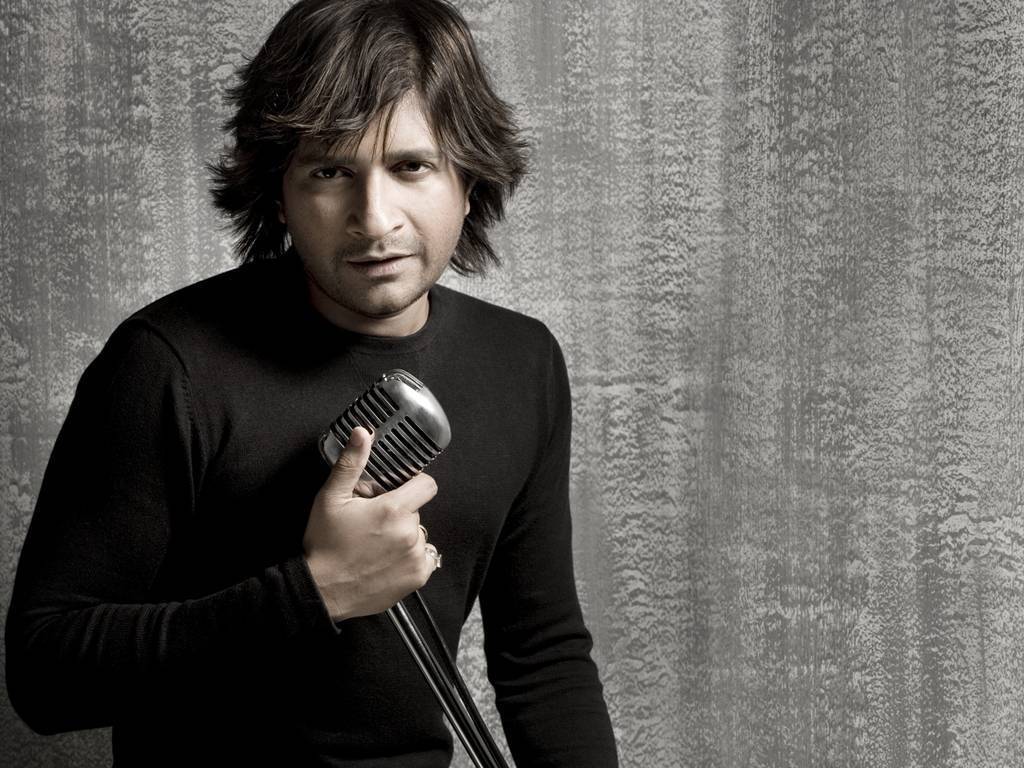
Singing a song well is my life, my junoon - K. K


In a field replete with novel voices, vocal gimmicks and calculated song ‘takes’, here’s a guy who has proved that simplicity gets superior results. KK, almost 15 years in the business, has long transcended the tag of being a mere singer and is nearing the league of the greats 
 Today, the number of your solos completely outnumber your duets and multi-singer songs.
Shall I tell you something? I am happy about this for a very funny reason - and that’s the fact that nowadays there are no duets that are recorded live. So while singing on track, the expression of emotions becomes doubly difficult as we do not even know who is singing with us, how he or she will sing and so on. 


But yes, I have sung non-solos too, and recently Pritam has recorded a nice duet with Shreya Ghoshal in Tell Me O Khuda. It was a challenging song, with some English and a lot of recall value.


Your equation with Pritam has always been special. He keeps saying that he takes you for a song only when the composition deserves you!
That’s really very sweet of him. He does give me great songs and I am proud of our association. It’s a very alag bond that mutually agrees on something extra from his side and the same from mine. Luckily we have a great track- record and most of the songs that we have done together have worked big-time from Shikdum in Dhoom to Gangster, Woh Lamhe..., Bhagam Bhag, Fight Club, Bhool Bhulaiya, Life In A...Metro, Billu, New York, Ajab Prem Ki Ghazab Kahani and many more. 


Pritam puts in a lot of emotions in his tunes and the lyrics too are rich in emotions. And as a singer, I don’t get fed up of the microphone. I never keep looking at my watch and he knows that. 

From Saaya in 2003 you began yet another memorable association that also is a brand by itself - your songs for the films of Mukesh, Mahesh Bhatt and Pooja Bhatt. Of course, most of that music too has been with Pritam.
Saaya had oustanding songs like Kabhi khushboo and Har taraf har jagah from Anu (Malik)ji, and I love that man M.M.Kreem - Awarapan from Jism and Maine dil se kahaa and Tere iss jahaan mein from Rog show his genius.


But besides Pritam, your songs for the banner under even Sajid-Wajid, Lalit Pandit and Sharib-Toshi have a certain similarity.
You really think so? But that’s not such a good thing! What do you think? 


Music lovers have no issues because most of the songs are good. But for a couple of years we seemed to be hearing very little of you, except in their films.
All of them are really fond of me. But I don’t know, yaar. I guess I have never been over-ambitious. 


You are dangerously low-profile too. Why is that so?
I guess that’s because my work is not my entire life! I have always balanced profession with my family. I can’t be insecure or be a go-getter at the cost of being with my wife and kids. 


Kites is a surprise from you - or a reinvention. What’s your take?
I am very glad that you liked my songs. The feedback, in fact, has been unanimous.There are so many, from children to adults, giving me reactions like “Dil kyun yeh mera has finally made you immortal” or that Zindagi do pal ki has taken me to another stratosphere. I was told things like I had done justice to the old kind of melody as well and that these songs were very fresh and different from me. I do think that I was the “bridge” between the classic old-style melody and today’s listeners - maybe Rajesh Roshanji thought of me because of this.


How do you look at the Rajesh Roshan experience?
It was fantastic working with him. His compositions and their nuances are different from anyone else, and he is soft-spoken and clear about what he wants. When I heard Zindagi do pal ki, I loved the way the intezaar kab tak phrase went and how Rajesh Roshan expressed those lines. “This is your song,” he told me gently. I loved the vibe that was very Kishore Kumar-like in Zindagi do pal ki and like Mohammed Rafi in Dil kyun yeh mera. And I loved the satisfied smile on his face when I rehearsed them.


You had worked together way back in Aap Mujhe Achche Lagne Lage. Why do you think you were called after a gap? Do you think that Hrithik Roshan had a hand, as it was on him that those songs were filmed and you had later sung all of Hrithik’s songs in Main Prem Ki Deewani Hoon?
I wouldn’t know. Hrithik was there for Zindagi do pal ki but he left after a while. But what I can never forget about Rajeshji is that he gave me my first and only experience of a live recording with a complete orchestra. It was for a song that was to be dubbed by Kumar Sanu, sometime in the late ‘90s. I was told that my voice would not be kept and the recording was at Mehboob Studios. I did it for that incredible tajurba - it was akin to singing at a concert! 


As a singer, how do you feel when a song works or otherwise? And how do you see trends going?
It’s impossible to know which song will work or otherwise. Person to person, it’s not easy to predict what someone will like - or detest. There have been a couple of critical reviews of Kites too. I can’t base my life on the written word. I don’t drive myelf into a frenzy if a song is a hit, and if it does not work, that’s okay. When I record a song, I have to understand it and give it my best. Like I loved my song Jaane yeh kya hua from Karthik Calling Karthik but there were people who do not like it.

I think that trends are going well - there is a lot of freshness around because of so many new singers. 

You put in a lot of soul and emotional richness in your songs, perhaps much more than anyone else today. What is your own perspective on this?
Without intending to sound boastful, I have been told this often and I have pondered on this a lot. I think that I keep life very simple, uncluttered and free from stress. As a singer, when I listen to the new song, I react to the words. I internalise the lyrics of a song first. When I am recording, there are no deviations or digressions. I keep my focus, whether it takes an hour or three hours. I sing a song the way it reads and with the emotions it needs. I don’t build a story or an aura around the song. What story can be bigger than life?

Also, I think that my balance of professional and personal lives makes me balanced. The mirror is very clear and there are no gray areas. I don’t keep track of how many songs I am getting vis-a-vis what others are called for. 

Do you change or modulate your voice according to the actor enacting a song?
I have never done that. Shah Rukh Khan, Hrithik Roshan or anyone else is not my issue. The song is my trip. Dil se kaam karo is my ‘funda’. Singing a song well is my life, my junoon. I don’t get into what goes behind a song and how and why it came to me. I am a specific spoke in the wheel called the song, and I have to focus on that. I can’t be calculating and go into things that have nothing to do with me. While recording a song, that track is my only God. I think that a song represents a singer’s persona. If he is not complicated in the head, the song will match! 


You began with Maachis, followed by several songs for A.R.Rahman, Anu Malik etc and then broke through with Hum Dil De Chuke Sanam’s Tadap tadap. But since then you have hardly sung for Rahman.
I recorded recently for his film 1-800-Love. The reason is very simple - Rahman works after 11 p.m. and I down shutters at 10! I prefer to be honest to myself and fresh and relaxed at work, using the “Early to bed early to rise” principle. The new song was taped because Rahman recorded it in the daytime, that too in Mumbai.

Sonia Gandhi is not a character in our film - Prakash Jha


It's a huge star cast that Prakash Jha handles in his forthcoming Raajneeti, and sticky situations are absolutely unavoidable. As the minutes tick away, delaying a press conference he has called for the film's promotion, the director anxiously tries reaching out to his ensemble cast.

An hour later, he is the lone ranger, talking about his latest labour of love.The film, loosely based on the epic Mahabharata, talks about politics and beyond. “I am very happy with the way the film has turned out,” says Jha, adding: “For once, as a filmmaker I can say that there is nothing I have not done that I should have. Be it the special effects, technical aspects, or the scale of the project, I have not spared any effort.” And yes, “All actors have worked with complete dedication,” he says, as part of his cast, including Ranbir Kapoor, Katrina Kaif, Manoj Bajpai and Arjun Rampal, walk in. 

Ugly side of politics
A story about the ugly side of politics, Raajneeti centres around the political Pratap family: the three men — Veerendra (Manoj), Prithvi (Arjun) and Samar (Ranbir), and Prithvi's wife Indu (Katrina). Nana Patekar plays a political mentor (Brij Gopal); Ajay Devgn (Sooraj) is a backward classes' leader, and Naseeruddin Shah is Bhasker Sanyal, a firebrand Leftist leader. “Politics is not a linear thing. Just so, my film is also not only about the politics of the state, but it deals with personal aspirations, greed, loyalty and betrayal,” says Jha. 

Jha and his team started working on the film, reported to have cost Rs. 45 crore, six months prior to shooting it in Bhopal. The cast, if surprising in parts, is also very impressive. Naseeruddin, Nana, Ajay, Manoj and Arjun are all National Award-winning actors, with Nana and Ajay having worked with Jha on his previous projects. The surprises are Arjun, Katrina and Ranbir. The three actors have transformed themselves to fit into what could be their most demanding roles till date. “My actors may maintain that I have mentored them through their roles, but the truth is that they have worked very hard. Take Katrina, for instance. She is not a natural with Hindi, but worked to deliver her dialogues with perfection,” says Jha. 

Asked how close Katrina's character is to Congress President Sonia Gandhi's, and Jha denies any resemblance, even though the draping of the sari and the accent seem inspired. “Please see the film and find out for yourself. Sonia Gandhi is not a character in our film,” he says. 

While Ajay's absence at the press conference is justified as he is shooting for Golmaal 3 in Goa, Nana giving the event a miss raises a few eyebrows, especially following reports of a fallout between the two friends. Ask if Nana gave him grief on the sets of Raajneeti, and Jha laughs it off. “Nana never troubled me. He is like that. We have no problems.” 

Social activist
Jha, who'd rather be referred to as a social activist than a politician (he had contested the 2002 and 2009 elections from Champaran, Bihar, on the ticket of the Lok Janashakti Party), says that he contested because he wanted to help contribute to the betterment of his constituency, and cannot be likened to any of the hardened politicians in his film. “You haven't seen me at the rallies of any party, have you?” he asks. “I don't believe in ideology or politics. I just wanted to be part of the process and be close to the resources, so I would be able to use them for the people. But now, I've no intention to be in active politics,” he adds. 

Despite his turnaround on politics, Jha maintains that the field requires professionalism. “I am very serious about the issue, and am using my film as a platform for discussing the engagement of professionals in politics. I feel that till professional-thinking people join politics, the future is not too bright,” says Jha. 

Jha's intentions may be serious, but he clarifies that he has made a commercial film for all to enjoy. “First of all, I want people to be entertained; then, definitely, I wish to be rewarded and awarded,” he candidly admits. “After that, if there is any change that my film brings about, I'd say it is purely unintentional.”

May 12, 2010

'MNIK is highest grossing Hindi film outside India'

Karan Johar, one of the most successful directors in India [ Images ] with all the four films directed by him starting with Kuch Kuch Hota Hai [ Images ] in 1998 is a super hit, was in America recently for the launch of the international edition of his biggest, My Name Is Khan.

But directing films is one of his several passions, he says. "I like to see directors and writers get a break through the films I produce," he says.

Though the films directed or produced by him have featured some of the best known artists in India including Amitabh Bachchan [ Images ] and his son Abishek, it is his association with Shah Rukh Khan [ Images ], who is there in the lead in all four films directed by him, has made movie history.

"When Karan says he has a film for me, I don't even ask for the script," Shah Rukh has said.

When My Name Is Khan opened over two months ago, there were some people and trade analysts in India who wrote that it had collapsed in the second week.

The film has grossed over $39 million worldwide; it is the highest grossing Hindi film outside India. We may reach $40 million. It is doing great as a DVD despite piracy in India. We have added over 20 minutes of deleted scenes.

Much of its success came from abroad.

Yes but it is also a huge hit in India. It was particularly strong in the United Kingdom grossing over $4 million. In fact, in the United Kingdom the three top-grossing films are directed by me.

MNIK did better business in the UK than 3 Idiots. And MNIK is still running in more than 100 theatres worldwide. We have just opened the international director's cut in America targeted at the non-diasporic audiences in America, showing the film first in New York and Los Angeles, and if it does well, expanding it to other cities.

What is the big difference between the director's cut and the standard edition?

[Chuckles] Fox Searchlight (the international distributor for the film) has edited out nearly half an hour from the original and they have done an excellent job. I was fully aware of the process and I was pleased to see the new version. Brevity may not be my forte. It is theirs.

Going back to India and the performance of MNIK there ...

We are surprised that it did beyond our expectations. This is not the usual masala film. This is not even a typical Karan Johar [ Images ] film. It is more thought provoking and deeply psychological film than anything I have done before. As I have said before, making this film make me grow more as a person than ever before.

What did Fox Searchlight do to this film that an Indian distributor could not do in the foreign markets?

Because of its vast network, Fox was able to show this film in the best of the theatres worldwide from Canada [ Images ] to Poland to Indonesia. Even in countries where Indian films are very popular but not well distributed, Fox did a remarkable job. From Egypt [ Images ] to Jordan to Malaysia, the film has performed strongly to a large extent because of the Fox distribution strategy and its ability to engage leading film writers in various countries to run stories on My Name Is Khan.

What are some of the territories have surprised you?

Indonesia, in particular. If a Hindi language film grossed about $75,000 there, it is considered excellent but our film struck a chord, and it became a sleeper hit grossing over $1.6 million.

In many Muslim countries, people were moved by what this film is trying to do: to remove a generalized, stereotype depiction of a religion. But extension, it speaks for any religion that is misunderstood an vilified. It offers a human message and it touches your heart.

I believe the film is enjoying a good run in Poland.

It grossed about $75,000 in its first week which is very good for a territory like Poland. I believe the second week is even stronger.

Playing a devil's advocate. Why would anyone care to see your film in Poland which has no history of watching Hindi films in big numbers?

My Name Is Khan is about humanity. It is a film about times and unfolds against the background of today's headlines. But above all, it is a film about the triumphant of goodness.

Are you working with Fox soon?

Right now I don't have any project but who knows what could happen tomorrow? Fox welcomed Dharma Productions and me as if we were family members. And surely if there is a project that interests a Hollywood studio, Fox would welcome us again.

Dharma has given a break to many directors

That is our pride. Last year we made Wake Up Sid [ Images ] directed by Ayan Mukherjee. Soon we have Punit Malhotra-directed I Hate Love Stories with Imran Khan [ Images ] and Sonam in release. I believe it is a sweet and funny film.

What is I Hate Love Stories about?

It is about this guy who hates Hindi movie love stories. But he can't believe that many things that happen in these films are happening to him in real life. And the movie becomes a quintessential love story.

I believe Sonam Kapoor [ Images ] is a luminous artist, the Waheeda Rehman [ Images ] of our generation but she hasn't yet got her due...

I hope our film will give her more exposure and success. She comes from an illustrious family and has firm values. And then there is also an excellent actress/

You don't shy away from discussing your hits and flops. What do you think went wrong with Kurbaan [ Images ] which was also the first film directed by Rensil D'Silva?

It came soon after another film dealing with the aftermath of terrorism in America was released and became a hit. Though Kurbaan was different from that film, still the audiences were hesitant to go and see it. Perhaps we should not have given it a wide release like showing it in over 300 theatres in the first week. The film might have worked better had the word of mouth had time to grow.

You have also said that as a producer you too take personal responsibility for the film's failure.

I feel that I wrongly projected the sexual violence as opposed to the emotional violence of the story. And yet the failure of the film surprised all of us. We still hear from people, not only in India but also in the Middle East, America and the United Kingdom who loved the film. But over all, the film did not take off.

What else have you learned from the reaction to Kurbaan?

I believe it is more important to accept the failure of a film than accept a success. For from failure, you learn a few things. But I also believe that one should never let a failure change one's outlook, as long as it was a credible failure, and Kurbaan was one such film; never to let the failure eat into your heart. We are proud of the way the film was shaped.

What else among Dharma Productions movies would you consider an honourable failure?

More than two decades ago my father (Yash Johar) produced Agneepath which did not do well. It was also a credible failure. Dharma productions soon launched another film. There was no time to mourn the failure. I always remember my father's attitude.

Amitabh Bachchan speaks very proudly of the film, and recites dialogue from it at his live shows?

Yes, he has told us again and again how dear the film is to him. And that is one of the reasons he has continued working with us.

People still remember your father decades after working with him, and many years after his death. Waheeda Rehman speaks about him as they are still friends.

My father was the production manager on Dev Anand's [ Images ] Guide (one of the best-known films starring Waheeda and made in the late 1960s). He played an important role in making the film what it is.

You have spent quite some time in recent years writing stories for films directed by others for Dharma Productions. When are you going to direct your own project.

I would say, soon, say after a few months. But I don't have any subject in my mind. I am using my sojourn in America to think about my next.

What kind of film are you inclined to make?

I think it would be a fun-filled film. It does not also have to be a film with many stars. But who knows? Beyond that I do not have any clue what the film is going to be, and where it would be made.

Arthur J Pais in New York
http://movies.rediff.com/interview/2010/may/12/karan-johar-gets-candid.htm

May 11, 2010

Sonam Kapoor: "I am in a space where I don’t want to date anyone"


Sonam Kapoor on her upcoming films, Deepika, Ranbir and life as a singleton. We profile the modern day Emma

Theirs seems to be a regular household. Dad’s gone to work, mom’s out meeting her friends, the children (Sonam, Rhea, Harshvardhan) are here, there and everywhere doing their own thing. Sonam is busy resisting chocolate, which is truly a hard day’s work in her estimate. “My parents really dote on us kids. We really believe the sun shines out of our bums because that’s the impression they have given us. They have given us enough self-esteem.”

She deviates a bit stating that being an actor is not the be all and end all of her life. She can do so many other things. “We kids don’t think our careers define us. We have a good grounding and value system. At the same time we are not ashamed to work. I think it’s a very middle class thing to believe in working hard in order to earn the right amount of money. I’ve never been afraid of being a peon. As an assistant director I ran around Chor Bazaar, taking the rickshaw or the train. My mom never let me take the bus but I could take the train or a rickshaw. If I quit acting tomorrow I’ll survive. I haven’t taken money from my parents since I was 17.”

She talks about the varied roles she has played. Her upcoming films have her pitted against art film favourite Abhay Deol in Aisha (her home production) and heartthrob Imran Khan in I Hate Luv Storys. She says she is more like Simran in I Hate… than Aisha. “Aisha is hyper, a meddler and Simran is more real, like me. She is an art director in the film. I used to do art direction and when Punit Malhotra (the director) came to me with the script, I was like, “This is me. You have used me as your inspiration, haven’t you?”
I immediately have to ask. But even before I open my mouth to frame the question she gives me a knowing look. “No, I am not dating Punit,” she shrugs. “He is a wonderful guy and we are great friends but we are not seeing each other. I am in a space where I don’t want to date anyone. I don’t want to be in a relationship just now. But more importantly even if I were, I wouldn’t talk about it. You would never get a confirmation or a denial from me.”

Both these films are important to Sonam. She hasn’t had a certified box office hit so far. Both her earlier outings, opuses as they were, came a cropper. Ask her if she is a little worried and she looks totally taken aback, “Why should I be worried? I have only played author backed roles so far and I am continuing to do so. I may sound immodest but I don’t think filmmakers like Rakeysh Mehra and Sanjay Leela Bhansali would have invested Rs 50 crore on me if they hadn’t seen something worthwhile. I have talent backing me.”

Yet ‘arch rival’ Deepika Padukone seems to have raced a little ahead. Sonam’s brow crinkles in exasperation as she remarks, “I don’t think anyone has raced ahead of anyone else. We all have our own paths to follow and our own graphs. Deepika is in a very different mould than me. We both have our own journeys. We were pitted against each other during Saawariya and Om Shanti Om because the media couldn’t possibly pit Ranbir Kapoor against Shah Rukh Khan for god's sake.” About her equation with the leggy contemporary she says, “I knew Deepika through Ranbir. I am not sure what equation I have with her now that they have broken up. There was potential for a friendship there but I guess our busy schedules got in the way.”

And no question on Deepika can be (unfortunately) complete without a question on Ranbir . Her childhood friend, reportedly one-time sweetheart, debut co-star. Where do they stand today especially when the reports about their equation keep varying every six months? “Ranbir and I are and will always be good friends,” she says softly. “But lately we have drifted apart. We don’t talk much. But I do know that when we do it will be from exactly where we left off.”

Sukanya Venkatraghavan

LINK

BRAND BUBBLY


One moment she is flying high after downing a soft drink. The next minute, she is singing praises of a fairness lotion. Then again, she is conspiring with John Abraham to auction off Abhay Deol’s belongings over a particular mobile phone. Walk out of the house and the ‘Sweet No More’ girl stares down from a billboard hawking sunglasses, and then she makes an about-turn to feature on a handout for hair oil, her face barely visible from behind shining tresses.

The ultimate product-pusher of the moment is not Shah Rukh Khan or Kareena Kapoor. It is Genelia D’Souza. Jaane Tu… Ya Jaane Na’s Meow, the golden girl who made the nation (and Imran Khan’s Jai) fall in love with her in 2008’s most refreshing romance, is perched pretty on top of the brandwagon.

Fanta to Fastrack, Perk to Garnier, Virgin Mobile to LG mobile phones, it’s Genelia’s face and voice gently coaxing the audience to try out no less than nine brands — and counting.

But the 23-year-old Mumbai girl isn’t the prettiest actress in Bollywood. Nor is she the sexiest. And with only one hit in Jaane Tu… and a string of flops to her name, she isn’t exactly hot box-office property. So what is it that makes Genelia D’Souza tick so loud and clear in the advertising world?

Magic mix

“Genelia is relatable, likeable and her brand values are personality-oriented rather than looks-oriented. She is vivacious and friendly and yet an achiever,” says Anirban Das Blah, CEO, Kwan Entertainment and Marketing Solutions and the man responsible for clinching brand deals for Genelia.

The girl who did her first ad with Amitabh Bachchan more than half a decade ago — for Parker pens with Bachchan describing her as “spontaneous” — seems to be the right mix for advertisers at the moment. At a time when almost all her Bolly peers are taking the sexy route — in films and endorsements — Genelia’s girl-next-door persona has struck a chord with audience and advertiser alike. Think Preity Zinta. Now fast forward to Genelia.
“Genelia’s magic charm lies in the fact that she is neither too sexy, nor too pretty and never intimidating. She is clean, lovely, laughing all the time. Everyone seems to like the kind of image she projects,” says adman Prahlad Kakkar.

Alyque Padamsee agrees. “Father, mother, kids, they all want to eat her up — and I don’t mean that in a sexy way. Genelia doesn’t alienate any part of the audience. Even when she is endorsing a bar of soap, she isn’t looked upon as a sex object.”

The relatability factor has played a key role in clinching deals for Genelia. “She has this certain cutesy appeal that works very well with the viewer. She can be your best friend, a really good daughter or the sister you never had. She looks like just another college girl battling love problems and pimples,” says Santosh Desai, ad veteran and CEO of Future Brands.

So at a time when everyone, from politicians to advertisers, is targeting GenY, Genelia’s trump card in the brand market is her undeniable youth connect. Little wonder then that all the brands she endorses have decided to play up the youth card, rather than bother about her not-too-impressive box-office record.

“Fastrack doesn’t look at top-of-the-line actresses as endorsers. The filter that we look through is brand fit. Our endorsers are those who would fit the bill as our brand customers. And Genelia is a fabulous fit with Fastrack. She is vivacious and vibrant and is, most importantly, open to experimentation — all qualities that Fastrack itself stands for,” says Simeran Bhasin, marketing head, Fastrack.

Spinz perfumes, one of the first brands to sign on the Masti girl, also hopes to cash in on the ‘youth icon’ factor. “The young women of urban India find a strong connect with the Spinz values of being trendy, zesty and edgy. Genelia is a perfect fit for the portrayal of these brand values as she comes across as young, hip and full of life,” says Ramesh Vishwanathan, executive director, CavinKare. The Genelia association has “improved brand ratings on imagery parameters across diverse markets”, he admits.

“Genelia strengthens the brand’s imagery of fun, youthfulness and free spirit,” adds Sudhin Mathur, business head, mobile communications, LG.

Fanta believes that Genelia’s “fun-loving, playful attitude” is a perfect rub-off on the youth-centric brand while for Dabur Vatika hair oil, the values of “youth and modernity” make the collaboration work.

Hot and cold

But unlike other stars, why isn’t Genelia’s poor film run and lack of offers — she currently has only two medium-budget films in hand — affecting her saleability in the ad market? “Genelia’s dry run in films has become subservient to her fresh appeal. Only once in a while does the advertising world get a unique and refreshingly honest brand like Genelia,” says Kakkar.

“The brand value of a person is sometimes bigger than her Friday release or the runs that he has scored in his last match when their personalities become a perfect fit with the brand they are endorsing,” says Desai. “Anna Kournikova never won a tournament and yet she has been one of the biggest endorsers of all time,” points out Das Blah.

The ad world is aware that Genelia has filled the space that once belonged to bubbly and zingy Preity. “They represent almost the same kind of brand values and advertisers are looking at Genelia as a natural extension of Preity,” says Padamsee.

Her interest in the brands she endorses has helped, too. “Genelia is a bundle of energy during the shoots. Her ideas and thoughts play a key role in the brand,” says Bhasin of Fastrack. “She sits across the table and discusses strategy, story concepts and gives valuable inputs,” adds Mathur of LG.

Overkill?

While the party has just started for Genelia, too much is often not too good. “The general tendency among advertisers is that if a particular celeb works for one brand, then she will work for a lot of others, which may not be necessarily true,” says Desai.

“Advertisers are just being lazy when it comes to looking for endorsers. This kind of overexposure is detrimental both for the brand as well as for Genelia. The brands in question stand to lose their uniqueness and credibility while Genelia’s brand longevity will be reduced dramatically,” cautions ad guru Piyush Pandey.

Too many ads and too few films leaves Genelia running a long-term risk of becoming nothing more than a pretty picture on wallpaper.

Well, perhaps she could start endorsing wallpaper then!

In an email chat, Genelia tells t2 about being branded

Why this sudden rush to endorse so many brands?
Well I don’t think it’s a rush at all. Things have fallen well into place and I have signed nine brands in a span of over a year. Brands opened up their celebrity requirements and their budgets once the market began recovering. I think things have worked out in a timely fashion for the market in totality across segments.

What are the factors that you keep in mind while signing for a brand?
For me the most important factor is the authenticity and the honesty with which a brand would promote their product. The product can’t be harmful and can’t be one that will adversely affect society. The brand and I should share a common ground with regard to our age, appeal and positioning. I feel deeply honoured that brands from the house of Coca Cola, L’Oreal and so on think that I can represent their proposition and promise. I believe that once you form an alliance with brands, they become a part of who you are and the relationship with the brand becomes a very strong part of the person you are.

Which brand have you enjoyed shooting for most?
All of them communicate a different facet of my personality and have also added to the person I am. I have enjoyed shooting a lot for all of them. Fanta’s latest commercials are so different that the execution of the concept was just a complete blast. Perk too was an absolute delight to shoot because my brief was to go crazy, which comes naturally!
Co-stars like Ranbir (Kapoor) in Virgin and John and Abhay in LG just made the entire shooting process more fun!

Which brand endorsed by you do you personally use?
Well, I try and use as many as possible. The reason I have aligned with them is because they appeal to me and agree with my sensibilities.

The advertising world is looking at you as the next Preity Zinta…
Being compared to Preity Zinta is truly an honour. I mean, who wouldn’t like being in her shoes? Having said that, I believe that each person has a unique offering which may appeal to some. I can understand where the comparison comes from since she is also fun and energetic but I think that as people we are different.

LINK