
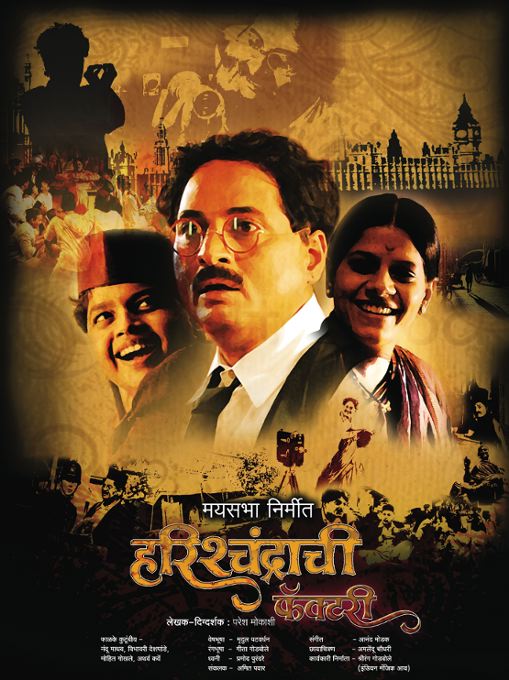
The Indian film industry is the largest in the world, boasts of many fine films and world class directors who make movies in several languages, has spread to the far reaches of the world and is beginning to capture the fancy of people beyond the Indian diaspora. But I never stopped to think of when it all began, who began it, and how and why. Fortunately for all of us, someone did and that labor of love resulted in a gem of a film, steeped in obsession, laced with humor and great dollops of history. This Marathi film (and how apt is that given the fact that the very first Indian film was made by a Marathi and in Marathi!!) is directed by Paresh Mokashi and tells the tale of Dadasahab Phalke and his obsessive quest to make movies. It begins in 1913 when Phalke (Nandu Madhav) has just ended a business partnership, and he, his wife and two sons are living in near penury in a one room tenement in Bombay. Phalke earns a living as a street magician and one day he and his son wander into a motion picture theater and are awed by moving pictures of people and animals. They go back in several times, and Phalke becomes fixated on the idea of making a motion picture. After all he had tried to open a photo studio, but it was shut down as people believed that every picture someone took of them captured and kept a part of their soul. Years later as I was traveling in Uganda and encountered the people's fear of photographs, a local told me people feared someone would come and use their pictures to identify, grab, and sell them into slavery!
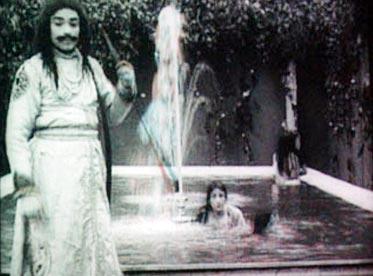
But I digress. Phalke's quest is fully supported by his wife Saraswati (Vibhavari Deshpande) and slowly the family starts to sell of their belongings so there can be money to experiment with images and pictures. Eventually Phalke realizes that he can do nothing unless he dives in and learns the craft and gets the right equipment. So he mortgages the last of their belongings and sets sail to England, there presenting himself to a film company and asking for help. He returns with the technical know-how and the equipment and sets about gathering a cast and crew. His idea is to make a story fully grounded in Indian history and culture, the story of Raja Harishchandra. The story (written by Mokashi, a thespian of the Marathi theater) is told with a deft and light touch, laced with ample humor and emotions. The relationship between Phalke and his wife is real and heartwarming. It proves the old adage that behind every successful man there is a caring woman! The making of the film within the film is a riot of hilarity, while still providing accurate glimpses of technique and equipment for the time.
In the end the film Raja Harishchandra is complete, hugely successful, and.....
READ MORE HERE


 by
by