Pages

Showing posts with label opinion. Show all posts

June 15, 2010

10 Years of Lagaan

The 2001 film has attained classic status for good reason, though breakaway cinema it isn’t. At least not in terms of overthrowing the Grand Hindi Film Formula. 


Make the film that you want to make” was Aamir Khan’s sign-off line to Ashutosh Gowariker along with “Good night” every night while they were shooting in Bhuj, Gujarat, in 2000 for Lagaan: Once Upon a Time in India. Gowariker went ahead and did just that. Made a film after his own heart… and a film that subconsciously (or perhaps consciously, though he may never admit it) followed in the traditions of all the classic Hindi films you can possibly name—must be a subconscious result of all the films that he grew up on and has loved.

So, as Lagaan enters its second decade (it released on 15 June 2001), it remains a film that commands instant recall—the hallmark of a classic. Going by the Oxford English Dictionary, a ‘classic’ is ‘a product or thing of the highest excellence’; ‘traditionally, classic means typical’; a ‘thing that is memorable and a very good example of its kind’ and ‘remarkably and instructively typical’. So, when all those years ago, Indian scribes, audiences and fans of the film described Lagaan as a classic, they erroneously gave it the right epithet. Erroneous because ‘classic’ back then was being qualified with ‘it’s so unlike what we’ve seen in Hindi films’; it’s ‘not typical Bollywood’. It is an example of a mainstream film with aesthetics of a crossover genre, etcetera, etcetera. The fact however remains that Lagaan uses every single cliché from the Hindi cinema book, only treating it differently.

Arguments for the film being different range from the typical Hindi film hero not wearing dhotis to a mainstream film using Avadhi and not Hindi as its language to garner pan-Indian audiences. Gowariker, in Chale Chalo—a documentary on the making of the film —admits to being discouraged by producers to avoid making a period film or a film on sport, especially on cricket. But except for the theme of sport, Gowariker has stuck to the formula. Can anyone think of a bigger mainstream film than the quasi-historical Mughal-e-Azam when it comes to period films and whose popularity still lies unchallenged? And don’t forget that the film was made in old Urdu even while catering to Hindi audiences. As for Lagaan, everything is formulaic—from its treatment, its characters, to the way Gowariker uses music (the sentiments in the songs are universal even while being placed within the film’s context, similar to the manner in which music and dance has been traditionally used in popular Hindi cinema).

Classical in its approach, Lagaan has a beginning (throwing of the gauntlet), a middle (the preparation for the match and the match itself) and an end (the climax, which will end in the win). Javed Akhtar, the lyricist of the film, talks about how the characters of the film aren’t the “normal, Hindi film characters”.

He couldn’t be further from the truth, or perhaps he refers only to the peripheral character artistes comprising Bhuvan’s ragamuffin team. But the main characters are completely stereotypical. The hero, never mind his costume of bundi (sleeveless jacket) and dhoti, is just the regular Hindi film bloke who takes on the villain even as he defies peer pressure and challenges figures of authority (remember the ‘gaon ka mukhiya’ [village headman] and the initial resistance of his friends?).

He’s got a love interest in Gauri (played vibrantly by Gracy Singh), a typical gaon ki gori [belle of the village] who believes in him blindly and will not give any bhaav [importance] to her beloved’s bete noir Lakha (a role which catapulted Yashpal Sharma’s career). How is she different from scores of other Hindi film heroines who have stood by the love of their life?

The hero’s mother (who thinks of the father just as every single mother, widowed or separated, in formula Hindi films does—sans a photograph, making allowances for the time that it’s set in!) is his inspiration, the only person whom he wants to justify his actions to. She, in turn, prays to the Almighty in time of adversity. Our hero thinks only of his beloved and mom before playing the final shot (just as any other Hindi film hero does before he delivers the final punch in the villain’s face).

The hero fights against a declared enemy. Remember Pran, Prem Chopra and Ajit pitted against Shammi Kapoor, Raj Kapoor, Rajendra Kumar, Manoj Kumar et al back in the1950s-mid-60s or even Amitabh Bachchan as the angry young man venting his angst against the system? Bhuvan too will battle and turn the tide around in spite of the fact that there’s a villain within (Lakha) and a villain without (Captain Russell). Best of all, you know Bhuvan will win. You know it the minute he agrees to his opponent’s demands.

He has to win—a formula Hindi film hero Never Loses. Bhuvan is involved with winning even as he goes through the process of it. It’s his life mission like all the other Hindi film heroes—who have to overcome all odds.

But unlike them (who go alone to fight ten goondas), our hero takes his ragamuffin team along. The one-on-one made it immensely watchable. And it’s always a great feeling when the underdog wins. Hasn’t Amitabh made it big on the strength of this image? Shah Rukh Khan’s career would never have taken off if Baazigar hadn’t happened!

Lagaan became big for two reasons: one, Aamir’s eye for detail (read production values; a model but not designer village wherein everything from costumes to colour tones of the desert were in consonance with the mise-en-scène), and two, Gowariker’s scripting and treatment. It is the technical finesse and overtly unusual theme that he deals with that works for Lagaan. ‘The vast majority of the movie is cut and shot in a very straightforward, unkinetic way. Khan has stated he wanted to recapture the human feel of traditional Hindi pics by directors like Bimal Roy and Guru Dutt, sans foreign locations and other trendy hooks,’ wrote Derek Elley in that touchstone of cinema, Variety, while reviewing the film in 2001.

Lagaan plays on emotions (like Dil Chahta Hai or DCH, which released just a month later), but it’s done with a certain realisation that a hero doesn’t lose (unlike DCH where they win and lose all the time). Every single act in Lagaan is geared towards that win. Roger Ebert of Chicago Sun Times gave the film three-and-a-half out of four stars, and said, ‘The most charming aspect of most Bollywood movies is their cheerful willingness to break into song and dance at the slightest pretext. This film is like nothing they’ve seen before, with its startling landscapes, architecture and locations, its exuberant colors, its sudden and joyous musical numbers right in the middle of dramatic scenes, and its melodramatic acting (teeth gnash, tears well, lips tremble, bosoms heave, fists clench). Lagaan is an enormously entertaining movie, like nothing we’ve ever seen before, and yet completely familiar… At the same time, it’s a memory of the films we all grew up on, with clearly defined villains and heroes, a romantic triangle... Lagaan is a well-crafted, hugely entertaining epic.’ There goes the formula angle again.

Then, there’s big time patriotism… thankfully, it’s not the in-your-face kind of patriotism that a Karan Johar film has inevitably, but it’s underlying through the film. The conflict points in the film don’t arise when they decide to play, but when they’re fighting a villain controlling them externally through his spy! That’s classic Hindi cinema. The villain has been defined from scene one, and the hero is out to vanquish him. Where are the grey tones explored the way they were in Dil Chahta Hai?

In DCH, you don’t know whether our heroes will ever make peace with each other, with themselves, whether a man’s ego will allow him to go claim his beloved (she’s gone off to marry another guy, remember), or whether he’ll ever apologise to his best friend for misbehaving. You don’t know whether our other hero will sit and mope around for the partner he’s lost to death or whether he’ll move on and live life some more. You see all of them growing and evolving as characters. Lagaan is a flat plane. Characters don’t evolve or even make mistakes. They set out to win and do. Simple.

I loved Lagaan then, I love Lagaan now, and most likely I’ll continue to do so in future. That is because I love Hindi cinema, and Lagaan reminds me that it’s alive and kicking!

June 8, 2010

Dawood’s Terror Chest - Piracy Business


THE D-COMPANY CONTROLS NEARLY 85 PERCENT OF THE PIRACY BUSINESS AND USES THE PROCEEDS TO FUND ITS TERROR NETWORK IN INDIA, REPORTS SHANTANU GUHA RAY

IT ALL started in Indore, when the city’s top movie hall released Avatar. Within 24 hours 20 copies of high-quality pirated CDs of the James Cameron 3D blockbuster had made their way to Mumbai and could be had all across the western Indian metropolis. Alarmed, the Motion Pictures Distribution Association (MPDA), the Indian arm of the Motion Pictures Association of America (MPAA), along with top Bollywood producers, announced that they had launched India’s first major drive to combat movie piracy.

All concerned are deeply anxious. According to Rand Corporation the Indian entertainment industry loses close to Rs 164 crore ($35 million) every year to various forms of piracy. The US-based non-profit research agency that tackles challenges facing the public and private sectors adds that 20 percent of pirated goods infringe the copyrights of international titles.

A section of the industry led by Moser Baer CEO Harish Dayani, however, believes the figure is nearly Rs 400 crore. “And yet the industry is not reacting. Indians are happy watching a pirated film because it comes at a low price,” Dayani laments.

MOST WORRYING of all is substantial evidence that D-Company — the underworld outfit controlled by Dawood Ibrahim — commands almost 85 percent of the $35 million racket, and uses the proceeds to fund terror activities in India.

“There are enough leads to establish the fact that D-Company has substantially scaled down its extortion racket because producers in India rarely go to private financers — having unlimited access to corporate funds from companies like Reliance Big Entertainment and UTV,” former top cop Aftab Khan, founder of the Mumbai Police’s anti-terrorist squad (ATS) told TEHELKA. The breakthrough came last year with the arrest of one Jatender Kumar, alias Rinku, who ran a pan-Indian syndicate on behalf of D-Company. The small town operation close to Delhi created high-quality master CDs and sent these to duplication units nationwide.

So what’s the way out? Khan says counter-piracy staff is being stationed at movie halls in Mumbai and some other cities to nab the local mafia who bribe cinema hall officials to record the movie on the very first day of its release. Later they make the master CDs for piracy. Khan quoted a 2009 Rand Corporation report on how Dawood, by degrees, had established a near-total monopoly to control the master copies of pirated Bollywood and Hollywood films.

Dawood — named a global terrorist by Washington in 2003 because of his proximity to Osama Bin Laden — has vertically integrated his operations throughout the Indian film and piracy industry. “If not checked, the business could double to $70 million by 2012,” asserts Khan, adding: “D-Company provided protection to two large camcorder syndicates based in New Delhi which, in turn, distributed the pirated master copies to wholesalers in Kolkata.” The Rand report says China, Brazil, Malaysia, India, Pakistan and Russia are among the countries where film piracy is rampant.

Veteran filmmaker Mahesh Bhatt calls piracy a parallel industry that can even finance films. “The pirates have enough greenbacks to run their own show. Yet Indian film producers rarely meet the government, and even when they do they fail to use the issue as a lobbying lever.”

Others see it as a mere law and order issue, or one that results from rivalry between filmmakers, multiplex owners and home video makers. The fact that it is a thriving illegal industry with a strong underground underpinning is blithely ignored. “There is no concerted effort to check the camcorder menace. Once a movie is sold, the production company feels that all of the rest is the distributors’ headache. You can’t solve the crisis with such a mindset,” says Taran Adarsh, a senior movie analyst and television show host. He is supported by Hiren Gada, Senior Director, Shemaroo Entertainment, who feels the issue should not get lost among a host of individuals talking loudly and not taking a decision.”

Last March, however, Moser Baer, UTV Motion Pictures, MPA and Reliance Entertainment contributed Rs 50 lakh each to form a counter-piracy coalition for mounting raids and conducting consumer education campaigns. As part of one such drive, the coalition launched Escape From Terror Byte, an educational book on film piracy, in three languages in Mumbai. Now there are chances that the Human Resources Development Ministry could soon include it in school syllabi countrywide. “Union HRD Minister Kapil Sibal has been very supportive of the move,” says Dayani, but he feels that the representative group should have been more broadbased.

Market analysts say the trouble in India is lack of coordination. For instance, barring the four, no one — multiplex chains like INOX, PVR or single-screen chains like UFO Moviez — joined the consortium. Also, though Indian copyright laws do have provisions to nail the offenders, their implementation is woefully lax,” says Rajiv Dalal, MD, MPDA.

Experts say there was a time when movies in India — both domestic and international — made decent business of 40 to 45 percent. But now, due to piracy they are opening with just 8-12 percent. Indeed it gets to be so rampant that companies are now reshaping their strategies and flooding the market with low-cost DVDs and VCDs. But Moser Baer, which did the same three years ago, reworked its strategy after the approach failed. This only suggests that basepriced products cannot by themselves rein in the great Indian piracy bazaar. For that to happen, the counter-piracy gang would need to grow a lot bigger.
 

June 7, 2010

India Journal: In Praise of Bollywood’s Global Appeal

Indian cinema, whether you consider it unbearable kitsch or high culture, is an undeniable global force.


Salman Khan’s moves and the music of A.R. Rahman are proud proof that India doesn’t blindly mimic the trends of entertainment in the West. It literally dances to a different drummer.

A vibrant local film industry in many countries is not the norm. The Philippine film industry, for example, has been devastated by Hollywood. Other than a few local-language love stories and corny comedies, it’s impossible to compete, one Filipino director told me. He only had a budget to blow up a few cars when blockbusters from the U.S. virtually blow up New York regularly.

Unless your audience wants something really different – like Kung Fu or Bipasha’s moves – it’s hard to beat Will Smith and Johnny Depp.

India doesn’t have that problem. Its unique stories and ways of telling them sell more than 3 billion tickets a year. In India, it’s U.S. films that struggle, rarely getting more than a fifth of the box office receipts.

There are millions around the world who appreciate the South Asian swagger. The star-studded International Indian Film Academy awards that ended this weekend in Colombo, Sri Lanka, will be watched by close to half a billion people when broadcast globally, its organizers say. That would make it one of the world’s most watched events.

“Hindi cinema is India’s most successful brand ambassador,” Shashi Tharoor, member of Parliament and former senior U.N. official, told film fans at the event.

And like all good ambassadors, cinema is more than a representative of India in foreign lands. It is a key connection for Indian’s living abroad to the home land.

The non-resident Indians’ appreciation of their ambassadors from Bollywood was on display at the IIFA weekend. The clusters of camera-clutching fans that collected at the entrances of every venue as well as the host hotel — where attendees paid up to $10,000 per person for three days room and board and access to the awards — were all stacked with NRIs.

The IIFA was created around 10 years ago to promote Indian films abroad. While Aishwarya Rai Bachchan may have been in a few Hollywood movies and on the Oprah show, the biggest Hindi film fans outside of India are still non-resident Indians.

International tickets sales account for 15% to 25% of the money made in theaters by Indian films, analysts say. For some films that figure can be as high as 50%.

Non-resident Indian movie goers often have different tastes than their cousins at home. Over the years, there have been many films, like “Don,” “Kabhi Alvida Naa Kehna” and “Salam-E-Ishq,” that have done fine at home but been blockbusters abroad.

“It is a certain escape [that] NRI’s crave,” through movies like “Kuch Kuch Hota Hai” and “New York,” said Anupam Kher, a Hindi film actor who has done more than 300 movies. “Stars like Shah Rukh Khan are the icons of Indians abroad.”

Big film stars and big films are lifelines for the expatriate Indian. They need Hindi cinema to stay in touch with home. Directors like Yash Chopra and Karan Johar figured out the formula for NRIs: big budgets, international locations and themes like family and home.

“The (NRI) audiences are not just looking at a film, they are looking at a way to connect to a value system,” said Anuvab Pal, an Indian screen writer who spent much of his life abroad. “They don’t want to watch cutting-edge cinema.”

Mr. Pal’s first movie “The Loins of Punjab Presents,” a comedy set in the U.S., was aimed at an international audience. He expected a healthy turnout from NRIs but his biggest audience ended up being at home.

“I was a little bit surprised because the story was set in Edison, New Jersey,” he said. “Our audience has mainly been city people in India.”

The Indian audience of course is much larger, but it is also more complicated and confused and looking for new story lines. Movie goers in India don’t need to be reminded of home so they are increasingly picking movies with mixed messages like “Dev.D” and “LSD: Love, Sex Aur Dhokha.”

As in the entertainment business across the world, it is hard to predict what the next big thing will be for Indians at home and abroad. One thing is certain though, it won’t come from Hollywood.

Multiplex Killed the Single-Screen Cinema-Goer


The man who brought the multiplex to India says he misses the old days when everyone shared one, big, tattered screen.

The scourge of multi-screen theaters that have spread in the last decade has brought the middle-class back to movie theaters but has also hurt the industry, said entertainment entrepreneur Manmohan Shetty. Mr. Shetty opened India’s first multiplex in Mumbai in 2000 through his company Adlabs Films (which is now part of the Anil Ambani empire and renamed Reliance MediaWorks.)

The fancy, expensive new theaters and the movies on their screens have ignored the country’s biggest movie fans who happen to have small salaries, said Mr. Shetty.

“Multiplexes have killed the industry,” Mr. Shetty told India Real Time on the sidelines of an event during the International Indian Film Academy weekend in Colombo, Sri Lanka. “We shouldn’t have forgotten the people on the bottom.”

While the multiplexes have upgraded the movie watching experience in Indian cities, they have also made it more expensive and exclusive. Movie makers are now aiming their content increasingly at the middle-class movie-goer even though they represent only a minority of viewers in India.

Mr. Shetty points to box office receipts in southern Indian which has fewer multiplexes and more movies aimed squarely at the movie-mad masses. As much as three-fourths of all the movie revenues in India come from that area of the country, he said. “In South India they didn’t break the pattern,” he said.

Tamil actor Rajnikanth is still a superstar at 60. He rules the South and has mass appeal because his films are fun. In old, single-screen theaters in Chennai, the crowd sometimes gets up and dances when Rajnikanth’s name flashes on the screen, said Mani Shankar, a movie director and writer from Hyderabad.

“There are mass films and class films,” he said. “In the South they still make the mass films.”

One of the best selling western films ever in India was “2012.” It worked because it was dubbed into many local Indian languages and it was an easy-to-follow, exciting story.

Much of India cannot afford or appreciate the movies from the new Bollywood, which is trying to woo the middle class minority, Mr. Shankar said.

“The movies are not visceral enough, they are cerebral,” he said.

May 27, 2010

Hoax Office Hardsell

To manufacture buzz, Bollywood’s PR engines will use anything


“What would you do if your mobile number was disclosed on the worldwide web?” I’m asked this rather odd question by Bollywood PR consultant Dale Bhagwagar. “I’ll ask the service provider to change it at once,” I reply matter-of-factly. But that’s definitely not the way Bhagwagar’s agile mind, adept at turning trivia into hype for the benefit of his famous Bollywood clients, would have reacted. In fact, one of his major triumphs arose from precisely such a situation. A few years ago, when his then client Shilpa Shetty’s number somehow got leaked on the internet (he avoids telling you how), he used the incident to whip up a media frenzy that planted her firmly in the day’s headlines. Press handouts were distributed widely and TV reporters were persuaded to take up positions outside the police station where Shilpa went to file a complaint. Candid, even boastful, Bhagwagar says happily, “We used the incident very effectively to hardsell Shetty.” And then, as we sip our cold coffees in suburban Mumbai, he casually proceeds to take a call from Rakhi Sawant to advise her how her run-in with the censor board over a music video could be played out in the media. “Good publicity is good. Bad publicity is better. Ugly publicity is the best because it travels the fastest and hits the hardest. The worst of all is no publicity,” declares Bhagwagar. 

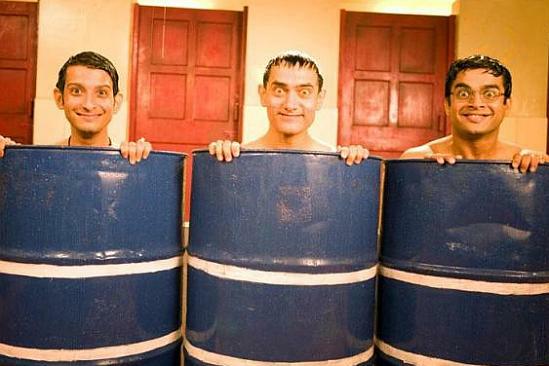
That is his motto, and indeed the motto of every film publicist in the business, though few are as brazen as Bhagwagar. They are more likely to favour sophisticated MBA-speak about “expectation management”, like Prabhat Chaudhary of Spice PR, the man behind the marketing success of Three Idiots and Ghajini. The promotion of films and stars has become a big, clever and crafty enterprise and image managers and publicity gurus are riding the wave. Some even have management students clamouring to join them and investors willing to put serious money into their once hole-in-the-wall companies. Film marketing budgets are skyrocketing, more inventive ways are being deployed to manufacture hype for a star or a film, and the media, without which none of this would work, has emerged as a willing handmaiden for the Bollywood publicity machine. “Movies are becoming commodities. What we’re witnessing is FMCGisation—movies becoming like soaps and shampoos,” says Siddhartha Mukherjee, senior VP, communications, at TAM Media Research. 

Take this week’s big release, Kites. The film’s first “look” was unveiled last year at the Cannes film festival and it has relentlessly been in the news ever since. The publicity machine has been fed stories of a Hrithik-Barbara Mori “affair”; of Suzanne Roshan walking out of her marital home; of Hrithik turning alcoholic; of director Anurag Basu’s supposed misunderstanding with producer Rakesh Roshan; of the climax of the film getting leaked in a tabloid; of a controversial kissing scene between Hrithik and a topless Mori. Last week, Hrithik got into a scuffle with journos at Shirdi; shortly after, the film got into copyright infringement trouble in Bihar; last Sunday, a glowing advance review of the film by a foreign critic started doing the rounds on the internet; and then, to top it all, came a tweet of heady approval  from none other than Karan Johar.

Is this just a string of coincidences or a variety of cunning schemes hyping the film and its stars? That such a question can be asked about so many films that have hit the screen in recent times strongly suggests the latter.
1The Hype Machine

  • Vidhu Vinod Chopra’s spat with Chetan Bhagat over denial of proper credits to him for Three Idiots
  • MNIK’s run-in with Bal Thackeray
  • Karan Johar’s apology to Raj Thackeray on the use of “Bombay” rather than “Mumbai” in Wake Up Sid
  • Kurbaan’s posters with a bare-backed Kareena Kapoor removed by Shiv Sena supporters
  • Billu Barber faces the ire of barbers’ associations. Title eventually changed to Billu.
  • Rann runs into trouble over Jana Gana Mana remix
  • Deshdrohi’s Kamaal Khan gets 5 seconds of fame because of the Marathi-Bihari issue in his film

2Issues

  • Aligning Rang De Basanti with causes like the Jessica Lall case, and fatal MiG-21 accidents
  • Making dyslexia a hot topic for the causerati to sell Taare Zameen Par
  • Playing up the failures of the education system to sell Three Idiots
  • Organising college debates on the role of youth in politics to kickstart publicity for  Rajneeti

Read more HERE.

May 25, 2010

The Art of Bollywood: Ode to a pre-digital era in Indian film poster art

Alisha Patel spends an afternoon with Rajesh Devraj, co-author of "The Art Of Bollywood", absorbing the historical outline of Bollywood poster art from the silent movie era onwards

LINK

In "The Art Of Bollywood" authors Rajesh Devraj and Edo Bouman document the hand-painted movie posters that made Bollywood the love of the East and the fascination of the West. Devraj and Bouman successfully map a design history that extends over 70 years in their ode to one of India's most unique art forms. The book, which spans the silent era through to the 1980s and 1990s, covers a pre-digital time in Bollywood poster history.

The period from the 1920s to the 1990s was a time when Hindi cinema developed its own distinctive visual language and produced its most magnificent images. These images, both well-known and rare, grace the pages of a book that is unique in that the focus is original poster art, as differentiated from re-prints, re-release posters, and regional variations. The crudely lithographed copies that are all-too familiar have been excluded and instead the publication embraces many other great visuals created by authentic poster artists, such as old movie magazine ads and booklet covers.

May 11, 2010

The Digital Witch Project


Digital cinema is here to stay, but can Bollywood adapt, asks RISHI MAJUMDER

WHAT DOES Dibakar Banerjee’s Love, Sex Aur Dhoka (LSD) have in common with the 1999 Hollywood horror The Blair Witch Project? Both were frontrunners in the use of digital camera. But beyond this quiz question should Indian audiences care about the arrival of digital cinema in Bollywood? They should. Beyond the mere image, the use of digital cameras in Bollywood has the wonderful potential to create a revolution in the quality and variety of films we watch.

Bollywood is now following LSD, with both Anurag Kashyap’s upcoming That Girl In Yellow Boots and Kamal Haasan’s Tamil remake of A Wednesday being shot digitally. Even those who dislike the digital camera passionately, like Hemant Chaturvedi (who calls Slumdog Millionaire ‘one of the ugliest films he has seen), predict that in five years digital cinema would have permeated Bollywood.

“Shooting digitally cuts costs drastically compared to shooting on 35 or 16 mm film,” says Kashyap. “This will lead to more experimentation and new filmmakers getting a chance to make their films.” He claims Yellow Boots would’ve cost two and a half times more if he’d shot it conventionally.

But cost-cutting is not the only reason. By some coincidence, both LSD and The Blair Witch Project used digital cameras to recreate the poor picture quality of amateur videos. But this doesn’t mean all digital films look tacky or inferior — digital technology has travelled far since 1999. High-end digital cameras were used to shoot blockbusters like Star Wars II and III, Apocalypto, Avatar and Oscar-winner Slumdog Millionaire, and their image quality was as good as any shot on 16 or 35mm cameras. Also, digital cameras are much lighter compared to unwieldy film cameras — and so allow for more experimentation. Kashyap, for instance, would’ve never been able to shoot the climax of Yellow Boots on the streets “because I would’ve had to get government permission, vacate the area and use extras.” Filmmaker Danny Boyle too has claimed that hauling heavy apparatus into Dharavi’s narrow lanes to shoot Slumdog Millionaire would never have created the same film. Digital cameras have other advantages such as allowing shots in low light without external lighting for a more realistic look. They also enable the filmmaker to view a shot immediately, almost as the audience will, to decide about re-takes.

Digital flag-bearers like Banerjee and Kashyap both cite examples of western masters like Martin Scorsese and Francis Ford Coppola who’ve shot digitally — “It’s the medium of the future,” they say. Those who don’t graduate to this medium will find themselves at sea once digital picture quality exceeds a film camera’s.

Digitisation will need Bollywood to overhaul its old guard of technical crew. “Sadly, Bollywood is not technically prepared to use this technology,” says Banerjee, citing a case where a producer imported five expensive digital cameras but forgot to order the matching post-production systems. He complains that film executives treat digital cameras like a “magic pill” that’ll guarantee “aesthetics and cost-cuts”. While working with film cameras is fairly standardised, the digital process varies from case to case. So much so that its advent in Bollywood has created a new designation among film crews — the Digital Imaging Technician. Banerjee sees this as just the first step: “It’s a change that has to occur every decade when new technology takes over the industry. It’s inevitable.”

April 28, 2010

What's in a movie name ?


LINK

Bollywood film titles have drawn on numerology, mythology, current affairs and swear words among other personal quirks. Three weeks ago, a commercial film was the first to have the word ‘sex’ in its title. TOI-Crest decodes the name game

We’ve said it above, but it’s worth repeating — Love Sex aur Dhokha is the first Bollywood film to have the word ‘sex’ in its title. Take a bow, Dibakar Banerjee, Ekta Kapoor and the Indian Censor Board. Because you have taken history and given it a new twist that will go a long way in changing how we view Bollywood.

Sex makes news
Balaji Telefilms’ COO Vikram Malhotra believes the title (and its acronym LSD) would have sunk a decade ago. “But today’s audience is open to discussing almost anything,’’ says Malhotra, adding that the movie’s content proved that the title was not just a gimmick. The Association of Motion Picture and Television Programme Producers (AMPTPP) rejected LSD’s title the first time, “but when Dibakar went and explained the concept of the film to them, both the Association as well as the Censors passed it,” he adds.

Like anywhere else, sex also sells in movie names. Not surprisingly, a quick scan through a list of movie titles registered throws up some interesting ones with the s-word in them. Pritish Nandy Communications has registered Sex Hazir Ho, while Suniel Shetty’s Popcorn Entertainment has rights to The Yoga of Marriage Love and Sex. Competing only with the Bhatts, in the ‘news inspires movies’ category, is Madhur Bhandarkar, who has quickly bagged the rights to Sex Swami Aur Videotape. Bhandarkar, who also has rights to names like Godhra, Jessica and 9/11, says movie names and headlines feed off each other. “Only yesterday, I saw a news item titled Love Sania and Dhokha,’’ he says, adding that those who know him believe that if he were not a filmmaker, he would have been a journalist. “News stories charge me up.”

The way we were
Film author Dilip Thakur recalls how all hell broke loose when BK Adarsh’s film Gupt Gyan (1974), a film on sex education came about. The movie was initially banned, but the efforts of Atal Behari Vajpayee, Chandra Shekhar and some other political leaders ensured it finally hit the box-office. It was lauded by physicians as well as the public and was one of the first movies to be screened in girls’ colleges and hostels.

Soon after, BR Ishara’s Prem Shastra (1974) was also released, but it failed at the BO. Ishara who was known to make movies with bold titles (Mann Tera Tan Mera, Charitra, Sautela Pati) also directed the Rehana Sultan-starrer Chetna (that had a flash of bare thighs in the poster). “I think today’s audience has no patience or tolerance,” says Ishara, “So all we can do is shock them.”

Names & numbers
Kaho Naa Pyaar Hai launched more than just Hrithik Roshan. This was also the first time numerologist Sanjay B Jumaani attempted to steer the fate of a film. “I added an extra ‘a’ in Na and Pyar and Hrithik became an overnight hit,” says Jumaani, now numerologist to the stars. He also takes credit for Vipul Amrutlal Shah’s success. “After I asked him to add his father’s name to his own, Vipul has given superhits,” says Jumaani, who has asked the producer-director to name his forthcoming film Action Replayy, with an extra ‘y’ in the end.

The Manmohan Desai way
Time was when a movie title was decided much later and a film was launched with just a production number. “Manmohan Desai was one of the few directors who thought of a name before he began a film,” says Prakash Pange, an old associate of Desai. “I remember him calling up Amitabh Bachchan to tell him that he was making a film with him in and as Mard. I then flew down to Mangalore where Mr Bachchan was shooting and got a picture of his fist as a promotional picture for the movie.” When film financier Anant Kumar laughed at Desai, who said he had planned to call another film Amar Akbar Anthony, Pange recalls Desai saying the name would become an anthem of sorts. “And it did.”

Means what
There are times when a title has gone against a film. Trade analyst Komal Nahata says a Lucknow theatre manager told him that the audience thought the recent Hum Tum Aur Ghost had something to do with gosht (mutton) and so avoided the film. “People didn’t understand what Road, Movie meant so they didn’t go down that road at all. LSD, on the other hand, generated curiosity and drew audiences,” explains Nahata. The analyst also believes that the audience has not changed much over the years. “One can understand that Wake Up Sid was targeted at an urban audience but something like Well Done Abba, a film about water woes in a village, is so mixed up that people didn’t bother with the film at all.”

I repeat
Script and dialogue writer Javed Siddiqui who has to his credit movies such as Umrao Jaan, Dilwale Dulhaniya Le Jayenge and Baazigar feels there is a dearth of titles in the industry and that is coming through. “Yeh shabdon ki majboori hain aur kuch nahin,’’ he says. Jeetendra has worked in two movies called Aulad (1968, 1987). And both Dharmendra and son Sunny Deol have acted in films called Dillagi (1978, 1999).

Siddiqui laments the repeated use of movie names like Umrao Jaan (1981, 2006), saying one never knows which version is being referred to. “Devdas has been made at least 17 times, which is probably why the latest version was called Dev D. Thankfully it wasn’t titled D. Das,” he says. Incidentally, Siddiqui is currently working on a documentary on Guru Dutt. “The epic Pyasaa was initially called Pyaas,” he reveals. “But, perfectionist that he was, Guru Dutt said the word Pyaas didn’t bring out the essence of the film in its entirety and changed the name to Pyaasa.”

I swear
With titles like Shree 420, Awara, Junglee and Bewakoof, movie names often crossed the line, yet ensured the hero’s character was always endearing. But when Shah Rukh openly played dark roles (Baazigar, Darr, Anjaam), the director made sure the movie name was not negative. Cut to Kaminey and the forthcoming Badmash Company (incidentally both have Shahid Kapur in the lead) and one notices the industry has come a long way. “A title really is the director’s prerogative and it should represent the film for what it is,” says Shahid, who claims he was never apprehensive of the Kaminey title. “On the contrary, I thought it was very true to the film.”

Constantly changing
“Titles are to movies what fragrance is to flowers,” says the ever-poetic Mahesh Bhatt, who gave us Hum Hain Rahi Pyar Ke and Dil Hai Ki Maanta Nahi. Bhatt has constantly chopped and changed the names of his movies to suit the times. “Traditionalists in our business concede that having a good title is half the battle won. A title that works in small-town India may not work with a multiplex audience and distributors are known to lobby with producers to get a title that caters to their constituency. But with changing demographics, movies and their titles are both changing,” says Bhatt. The director went from middle-of-the-road titles in the ’80s (Arth, Saaransh, Naam) to youthoriented movie names in the ’90s (Aashiqui, Dil Hai Ki Maanta Nahi, Hum Hain Rahi Pyar Ke) and catered to the Hinglish audience at the turn of the millennium (Murder, Gangster, Jism, Crook).

Master showman
Jaiprakash Choksey, who has written Jan Naayaak, a book on Raj Kapoor (and also distributed his films) says the filmmaker registered Satyam Shivam Sundaram in 1954. The film was finally made in 1978. “The story was inspired by Lata Mangeshkar’s life, of a woman with a divine voice and a plain face. In fact, Raj Kapoor wanted her in the film but there was no way Lataji would have acted in the film,” says Choksey. Raj Kapoor also gave Hindi cinema its first acronym title with Ram Teri Ganga Maili (RTGM). Contrary to popular belief, Choksey says the title had nothing to do with Lord Ram but referred to an incident in Ramakrishna Paramhansa’s life that Raj Kapoor had read about.

Title song
With Dilwale Dulhaniya Le Jayenge came the era of making lyrics into movie names. Incidentally, it was Kiron Kher who suggested the title for the Shah Rukh-Kajol-starrer that is still running for the sake of love and lovers. Director Karan Johar, who assisted on DDLJ, says such titles have a retro feel but might not work now. “I’m not sure Kabhi Khushi Kabhi Gham would draw crowds today.” Johar adds that he’s finding it tough to come up with a title for his forthcoming remake of Stepmom. “Something like Ghar Parivar or Love You Ma won’t work. Neither will an English title like Wake Up Sid (incidentally suggested by leading man Ranbir Kapoor), which will alienate a large portion of the audience.”

Gimmicks galore
Actor IS Johar was so obsessed with himself, he had many film titles credited to his name (Johar Mehmood in Goa, Johar in Kashmir, Johar Mehmood in Hong Kong and Johar in Bombay). “He also made a family planning film called Nasbandi which did catch a few eye balls,” says Thakur. Andheri Raat Mein Diya Tere Haath Mein was Dada Kondke’s attempt at a gimmicky title. It didn’t pass muster with the audience.

Sometimes the title of a film is changed to suit a particular audience. The Rishi Kapoor starrer Honeymoon was released in North India as Suhaag Raat and Amitabh Bachchan’s Nastik was called Adharmi in some places.

Mera wala title
Filmmakers are possessive about their titles and refuse to part with them easily. Raj Kanwar wanted the title Daag but since Yash Chopra refused to part with it, he had to go with Daag The Fire instead. Ram Gopal Varma’s remake of Sholay was finally released as Ram Gopal Varma Ki Aag. The film bombed.

AMPTPP vice president Vikas Mohan explains that a movie title is registered after scrutiny. “A title can be registered for just Rs 250 a year. Every subsequent renewal costs Rs 100. If it has a tagline, the price doubles,” he says. “Also, a title cannot be bought or sold independently. It has to be surrendered to the association and is then given to the first person in the waiting list.” The Censor Board has always played a pivotal role in movie names. While Ramanand Sagar’s Charas and BK Adarsh’s Gupt Gyan both came under the scanner, Kaminey and LSD were let off with much less fuss. “We did deliberate upon both the names, but realised there was nothing objectionable about them,” says Vinayak Azad, regional officer of the Censor Board.

April 16, 2010

The Indian Premier Leak

THE IPL ISN’T ABOUT CRICKET. IT’S ABOUT BIG MONEY, POLITICS, SEX AND DRUGS. SHANTANU GUHA RAY ON THE MURKY CANVAS OF THE THAROOR-MODI SPAT

IT’S THE open secret no one wants to acknowledge: the IPL is not about cricket. The ugly controversy surrounding Minister of State for External Affairs Shashi Tharoor and IPL chief Lalit Modi — over Tharoor’s friend Sunanda Pushkar owning 4.9 percent free sweat equity in the Kochi team that Tharoor helped put together — is merely a warning sign pointing to a much deeper dirt pit that comprises in equal parts big money, politics, glamour, greed, sex, drugs and intense backroom jostling.

The reason the Tharoor-Pushkar controversy snowballed at the speed it did is less to do with the facts of the case than this unsavoury combination that underpins everything to do with the IPL these days. Unfortunately, much of the news about these seamy dealings is still merely in the realm of gossip and speculation: murmurs in a baroque gossip bazaar. Yet, recounting these murmurs is enough to outline the shape of things. After all, remember, the murmurs are all emanating from insiders. But to put things in perspective, first the primary question: What are the facts of the Tharoor- Pushkar case? With the IPL announcing that it would invite two new franchises to join the league, a few months ago Tharoor actively began to promote the idea of a Kochi team and helped cobble together a consortium of investors — Rendezvous Sports World — to sponsor the team. As a cricket enthusiast and MP from Kerala, Tharoor was presumably motivated by his zeal to bring home turf Kerala into the lucrative circle of the IPL. Ordinarily, the fact that a female real estate professional close to him was given 4.9 percent free equity in the team would have raised absolutely no eyebrows. After all, prima facie, there was no allegation of any money transaction or public funds being misused, nor had Tharoor extended any ministerial favours for the franchise. So why the disproportionate stink?

Why did the Tharoor fracas threaten to disrupt Parliament? Why did news of it reach Prime Minister Manmohan Singh in far away Washington and overshadow his talks with President Obama on Afghanistan and the Nuclear Liability Bill? Why did Tharoor have to spend two-anda- half hours on Thursday morning, April 15, with one of the Capital’s top corporate lobbyists and troubleshooters (who works for one of the richest men in the world) seeking help? After all, as one of the protagonists said, “It’s common knowledge that other politicians running across aviation, agriculture road transport and the Opposition, are minting money and have undeclared stakes in every cricket pie. Why has there been no uproar about all that?”

The answer is, wittingly or unwittingly, Tharoor had disturbed equations in the dirt pit. Rumours are, when the Kochi team won the bid, many carefully laid plans by others were laid to waste. To understand this, for a moment, return to the facts: the other stakeholders jostling for a franchise were the Sahara Group, owned by Subrata Roy; the Pune team sponsored by Saif Ali Khan, Kareena Kapoor and relatively lesser-known businessmen; and an Ahmedabad team sponsored by the Adani Group, one of India’s top infrastructure companies.

Subrata Roy, of course, outplayed everyone by making an astronomical bid of $370 million, prompted by his numerologist. Pune was out of the running. That left Kochi and Gujarat running neck and neck.

So what made Lalit Modi suddenly twitter innocuously last weekend about Sunanda Pushkar and how Tharoor had allegedly asked him not to inquire into who she was — the kindle that lit the fire stack? It’s common knowledge that Modi and Tharoor are friends, so why this sudden and ugly fall out? (Friends of Tharoor say that Modi is misusing a bantering remark the minister had made to him over a drink. Tharoor is, indeed, set to marry Pushkar but is waiting for a divorce from his Canadian wife Christa Giles to come through and, therefore, has been loath to make his relationship public. This is why when Modi asked him in a nudge-nudge sort of way, “So, who is Sunanda Pushkar?” Tharoor had laughingly evaded the question saying, ‘Don’t ask me that as yet.’ So what made Modi turn that into something sinister?)

The answers lie muddied in the pit and snake back to earlier events. When Lalit Modi lost the elections to the Rajasthan Cricket Association (RCA), he not only lost a fiefdom, he lost much-needed immunity. With a Congress government replacing the BJP in the saddle, his political patronage was blown and more than 20 cases were opened against him, relating to tax evasion and financial irregularities when he was at the helm of the RCA. He desperately needed new armour, and a firm foot back in the Board for Control of Cricket in India (BCCI). The rumour mills say that Lalit Modi had approached Gujarat Chief Minister Narendra Modi and was assured by the latter that if he could ensure that the Gujarat team wins the franchise and brings both glamour and money to the state, he’d be made the secretary of the Gujarat Cricket Association (of which the chief minister is the president).
image

At first, Modi tried hard to make friend Tharoor back off so that the Adani bid could be more competitive. He even tried to mislead the Kochi group by telling them that all they needed to win the race was $299 million. The consortium, however, was reportedly alerted by former Indian skippers Sunil Gavaskar and Ravi Shastri that Modi was actually seeking $322 million. The Kochi team was also told that they would face many technical hurdles to block them from winning the bid.

But instead of backing off, the Tharoor- mentored Kochi consortium bid an astronomical Rs 1,500 crore and won the franchise. Powerful men — potential investors and politicians — across the country flew into a tizzy. Allegations began to fly fast and thick. The Kochi consortium alleges that Modi offered them a $50 million bribe to abandon their bid after they had won the Kochi franchise. They refused. The desperation in different quarters soared.

The rumour goes too that, at one point, Modi made an urgent call to Tharoor saying things had gone beyond him and if Tharoor didn’t back off, Modi’s life would be in danger. But Modi was not the only angry man. Rumour also has it that Tharoor finds himself politically isolated for other reasons.

Such is the jostling for stakes in the IPL money-glamour-influence pie, a very senior UPA cabinet minister from Maharashtra and a former classmate of Tharoor’s, had called the latter asking him to get Rendezvous Sports to offload its stakes in favour of an owner of a Maharashtra- based white goods giant. (In a serpentine twist, this businessman had apparently first paid Modi money for a chance to invest in the Ahmedabad team. When that franchise bid was foiled, he wanted to invest in the Kochi team.) However, apparently driven by some sense of chivalry to the original consortium, Tharoor refused.

Soon after, a senior functionary of the BCCI sent Tharoor a similar message in favour of the corporate giant. Tharoor again declined. He had just made himself another enemy within the world’s richest cricket board.

The further irony is that, according to highly reliable sources in the cricketing management fraternity, the 4.9 percent free sweat equity Sunanda Pushkar is being pilloried for does not even belong to her. A mere .5 percent is reserved for Pushkar. Disturbingly, the rest belongs — off paper and on trust — to two iconic cricketing giants, one of who is still playing for the Mumbai IPL team. This free equity is the quid pro quo they demanded for helping put the Kochi team and its promoters together — not a rank corruption perhaps in the larger scheme of things, but certainly an impropriety.
THAT THE THAROOR FRACAS SNOWBALLED SO QUICKLY HAS NOTHING TO DO WITH THE FACTS OF THE CASE. IT’S TO DO WITH BACKROOM POLITICS

One has a greater sense of the fantastical world of the IPL and what passes for right and wrong when you take into account the fact that Tharoor is probably right in saying the equity will not benefit him and is commensurate with what Pushkar was bringing to the table as a highly attractive and successful marketing professional. Yet, he is caught in a twilight zone where he is honourbound and cannot entirely disclose why he is saying this. (This might be why small white lies seem to be sprouting around them. Pushkar claimed in a written statement to the media that she had been approached by Kolkata Knight Riders (KKR) to assist them as a marketing consultant. While it seems true that top-line event management professional Karim Murani associated with KKR is a friend of hers, KKR co-owners Shah Rukh Khan and Jay Mehta, actor Juhi Chawla’s husband, have denied the claim outright.)

BUT MONEY, influence and ambition are only one set of ingredients in the IPL dirt pit. Each match is accompanied by a swirling constellation of late-night parties and beautiful women that moves with it across cities. Drugs and sex, then, seem to be another equally potent mix driving rivalries and events in the world of IPL.

Back to murmurs in the rumour bazaar then. It appears a thwarted franchise bid is not the only reason Lalit Modi set out to discredit the Kochi team in the hope that he could have it disqualified. He has other personal reasons for declaring war on Tharoor.
image

Sources in the rumour business say that the night before Tharoor met the city’s most influential troubleshooter, he and his Man Friday, Jacob Joseph, had put together what they claimed were documents that would sully Modi’s reputation. A few days earlier, newspapers had carried front-page stories linking a beautiful South African model, Gabriella Demetriades, with Modi. It seems Modi no longer wanted the association and had requested Tharoor’s office, as Minister of State for External Affairs, to deny Gabriella a visa. Piqued by the backroom pressure and anxiety Modi had been visiting on his boss and the Kochi team, Tharoor’s aide Jacob Joseph refused to entertain the request and not only expedited the visa but apparently taunted Modi’s aides about it. The story goes that when Modi found out, he called Tharoor in a rage at night and slammed the phone down, vowing vendetta.

Modi has consistently told the media that he does not know Gabriella and has nothing to do with her. Unfortunately for him, however, he seems to have left an e-mail trail when he wrote to Joseph for help about denying the visa. These mails contravene his claim about not knowing Gabriella because in his hurry to shunt her off, he apparently forgot to delete his chain-mail exchanges with her. “In the mail to her, Modi clearly tells Gabriella that he will handle the visa and that there should be no problems. So why did he change his mind? Is there a fear that Gabriella would spill some beans he would not be able to handle?” says a senior BCCI functionary, who is aghast at the Modi-Tharoor row and the way it has blown craters in the reputation of a tournament that, till recently, was being touted as the world’s fastest growing sports show.

There are other pieces in the counter-campaign being prepared against Lalit Modi. Among them is the assertion that Modi was not only booked for drug abuse in college but is involved in a court case for cocaine abuse as recently as 2006 in the UAE.

The April 15 meeting with Delhi’s top corporate troubleshooter also seems to have paid other dividends for Tharoor. Support has started pouring in from many quarters. The office of Subhash Chandra Goel, Chairmain Zee Telefilms, for instance, has offered clinching evidence of Modi’s involvement in a lottery scandal in India’s northeastern states for which a court case has been going on for years. (It’s in keeping with the dirt pit that Goel has, of course, been at loggerheads with Modi ever since his Indian Cricket League (ICL) was scuttled by Modi and his IPL with the backing of the BCCI, even though the ICL had been first off the block.)
GUJARAT IS NOT THE ONLY CAMP MIFFED WITH THAROOR. HE WAS ALSO UNDER PRESSURE FROM A BIG WHITE GOODS GIANT TO GET KOCHI TO TRANSFER ITS STAKES

“It’s become a free for all,” BCCI top man Shashank Manohar told TEHELKA in disgust over a brief telephonic conversation. “The IPL is now becoming the dirty underbelly of Indian cricket.” Manohar — who has been named as IPL co-chairman — insisted every issue would be discussed and debated at the BCCI-IPL sub-committee meeting scheduled next week and asserted that he would happy if all franchisees opened up their stakes for review in a transparent manner.

As this story went to press, in fact, news began to trickle in that the Income Tax department had launched a raid on the IPL headquarters in Mumbai.

This would probably be worrying news for almost everyone involved in the IPL. To open up everyone’s stakes is equivalent to yanking the lid off a can of worms. In the grimy mess that would ensue, Sunanda Pushkar’s 4.9 percent would probably look like a child’s playtime snack.

Sources in the Intelligence Bureau (IB) say that when one of the richest men in the country says he owns a team through personal wealth, it is something of a lie. The stakes have apparently been bought through his company with shareholders’ money, which makes the Rs 43 crore his team lost last season an unlisted liability for public shareholders.

But as the cliché goes, this is merely the tip. There are also rumours that a key protagonist and IPL official has holdings not just in Rajasthan Royals, but also in Kings XI Punjab and KKR. IB officials add that this functionary also has a stake in a media company associated with the IPL and owned by a relative.

There are other lateral movements afoot — unfortunately motivated more by a need for secure pastures it seems, than a consideration for the game. KKR skipper Saurav Ganguly, for instance, has apparently approached fellow Bengali Subrata Roy for possible absorption in the Sahara Team. A top KKR official says Ganguly has also advised many of his fellow players to jump ship. The rumour mills say Yuvraj Singh has also sent a similar message to the Sahara chairman.

But these are relatively minor moves. The bazaar gossip says the editor of a major media house, whose son had recently come under the radar of corporate intelligence bodies, is also trying to get into the IPL franchise racket.

In the middle of all this, a third angle is brewing silently that threatens to queer things for those batting themselves sixers through the IPL. This involves the former BCCI and ICC president, Jagmohan Dalmiya, who has been camping in Delhi for the last few days.

Dalmiya, totally sidelined within the BCCI and left watching the IPL circus from the wings, is now determined to force the IPL to share its profits with the state cricket associations — thereby divvying up the money pie. Currently, IPL — which earns more than Rs 700 crore a year — pays a pittance of Rs 4 crore to each state association. Dalmiya wants to raise that to around Rs 30-40 crore. He has enlisted several politicians cutting across party lines in this campaign. By getting the state cricket associations to back him, the wily gamester could get a chance to reinsert himself into the big game.

The pity is nothing it seems is above board with the IPL anymore. Even spectators have a scam going on. Last month, Income Tax officials were alerted across the country to find out whether IPL officials were fudging tickets and avoiding tax. Their findings were in the affirmative. In a demeaning instance of ‘you scratch my back, I scratch yours’, it appears corporates were buying loads of lower denomination tickets yet accessing box seats that come with complimentary liquor and food. This was helping IPL organisers to avoid paying entertainment tax.

With the IPL having stooped so low, it might really be time to blow the whistle officially. The irony is that this must have been the last thing on Lalit Modi’s mind when he tweeted about Shashi Tharoor and Sunanda Pushkar last weekend. But his tweet has indeed become a whistle.

March 21, 2010

'Idiot' is politically correct!


Filmmakers win the battle with the censors for retaining risqué scenes, but dilute the dialogues in the subtitles, says Anuradha Varma

When Barbara Mori tells co-star Hrithik Roshan “Main ullu ki patthi hoon” in this summer’s release Kites, or when Dharmendra delivered his famous dialogue, “Kutte, main tera khoon pee jaoonga”, people all over the world could be reading it as “I’m an idiot” or “You’re a fool”.

Welcome to the world of subtitling... where filmmakers, who battle the censor board to get ‘objectionable’ scenes cleared, allow dialogues to be sanitised when it comes to subtitling. Says censor board member Nandini Sardesai, “As long as no word is inserted, there is no problem. The other day, I saw the word ‘shit’ written as ‘s***’... we wouldn’t have objected to that!” Vinayak Azad concurs, “It’s common sense, isn’t it? If it’s in the approved dialogue, why can’t it be in the subtitles? It’s self-censorship.”

Defends a spokesperson at HBO, “Some words or slang may be mild, but not read so proper, hence these are further edited in the subtitles to suit the sensibility of the medium.”

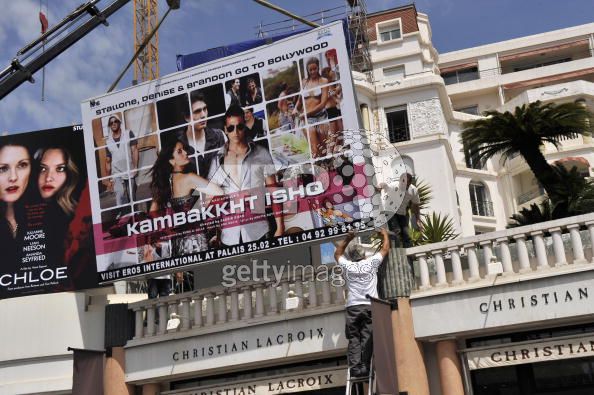
Most viewers are used to finding even words like “bitch” (Kambakkht Ishq) changed to “witch” or “jerk” turned to “idiot”. Says freelance writer Manoj Saral, “We automatically tone down abuses. For instance, ‘bastard’ will become ‘stupid, idiot or fool’ or a Hindi ‘gaali’ will be written as ‘Shucks!’ For the Middle East audience, even the word ‘jehad’ has to be changed to ‘righteous war’.” For Dev D, director Anurag Kashyap sat through the process, and tried to retain the spirit of the scenes.

Besides the demands of catering to a world audience, with regions like the Middle East that insist on conservative dialogues, tacky subtitles are also a result of the disorganised nature of the business. Comments filmmaker Pritish Nandy, “The people who do subtitling in India are not exactly conversant with English. They are good with Hindi, the original language of the film.”

Agrees Saral, “Anyone with a working knowledge of English can enter the field. A film is sometimes subtitled for Rs 1,000.” Says Devbrat Das of Words India, “For companies, it can be between Rs 5,000-Rs 50,000.”
Adds MS Sutar, of Future Works, in the business for nearly 35 years, “People like Ashutosh Gowarikar and Aamir Khan go into the details of the subtitles, but most don’t. We are regularly asked to do the job in 24 hours as the filmmaker wants to send his movie for a film festival.”

Explains Pritish, “We always subtitle a censored print. So there are no problems. We take a serious interest in subtitling our films when we send them to international film festivals or to overseas distributors. In fact, our overseas sales agents often work with us on the subtitling to ensure that the nuances of every region, every culture are correctly taken care of. However, in India, our distributors and those who lease the rights to our films take charge of subtitling and we allow them to. If they want our intervention, we work along with them. If they don’t, we let it be.”

There are filmmakers who retain the language, like Madhur Bhandarkar. He says, “My associate director oversees the subtitling process. From Chandni Bar to Jail, I have stuck to the dialogue, including abuses. For Traffic Signal, we worked with writer Nasreen Munni Kabir, so the scenes were accurately interpreted.”

Ishqiya director Abhishek Chaubey admits that it’s commercial considerations that ultimately rule. Having worked on Vishal Bhardwaj’s Omkara, he says, “We had to tone down profanities. An ‘adult’ film like Ishqiya would get a ‘15 and above’ rating in the UK and we don’t want to lose that audience.” However, between the rush for the box-office and film festivals, viewers are often left with tacky subtitles. Says Abhishek, “We had our subtitles once the script was locked, a year before the film released. Directors should get involved in their films. I’ve seen the audience in Europe lose interest because of the bad subtitles.”

Till then, it’s the audience that has to make do with watered down versions of films!

March 9, 2010

Screen syndrome

The hero with a debilitating condition may not be entirely convincing. But the city welcomes him in any case.


Rizvan Khan is afraid of new people and new places. He can’t stand loud noises or the colour yellow. He does his tasks by the clock and does not understand most of what people say or do. He can’t cry. Rizvan has Asperger’s syndrome, an autism spectrum disorder, and is the hero of My Name Is Khan (MNIK). His biggest USP? He is played by Shah Rukh Khan.

Having lost his stepson to a racial attack for bearing the name Khan in the aftermath of 9/11, Rizvan sets out on a seemingly impossible journey to meet the American President and tell him: “My name is Khan and I am not a terrorist”.

When Rizvan finally meets the President — of course since it’s a Hindi film the President comes to meet Rizvan — you get all misty-eyed.

Made with Rs 55 crore, the film collected Rs 150 crore in the first week in India and abroad, say initial reports.

In these troubled times, when “twitter” reminds you more of cows on planes than birds in the woods, and “wave” has more to do with social networking than with the seaside, the Hindi film hero needs some more ammo to pack in his punch. He must have a debilitating condition, rare and incurable, and preferably unpronounceable.

Novelty factor

In Paa, the 12-year-old schoolkid Auro suffers from progeria, a severe genetic condition where the body ages must faster than is normal. It is an extremely rare condition that affects one per eight million live births. In India, there is just one known instance — a family from Bihar now based in Calcutta with five children who suffered from progeria. Four of the kids have died. Ekramul, the fourth child, was supposed to meet Amitabh Bachchan after the release of Paa, but died before he could. He was 23.

In Paa, Amitabh’s handsome face is hidden behind layers of make-up, the commanding height shrunk with some superb cinematography and the rich baritone replaced with a raspy whisper. The film, made on a “tight” budget of Rs 14.75 crore, grossed Rs 3.5 crore in just nine days.

The Hindi film — and Amitabh Bachchan — has “evolved” since 1974, when the Salim-Javed scripted Majboor had Bachchan ready to face the noose for a murder he didn’t commit to secure the future of his wheelchair-bound little sister, played by Farida Jalal. Bachchan could only be whole then, and a saviour of the disabled. Now Bachchan is the disabled protagonist.

Disability sells, as the box office says. But is that such a bad thing?

According to trade analysts, the trend started with Aamir Khan’s directorial debut in December 2007, Taare Zameen Par, which had Darsheel Safary as a schoolkid with dyslexia, who stole all hearts. Made on a budget of Rs 12 crore, the film earned Rs 131 crore.

Of course, in 2005 there was Sanjay Leela Bhansali’s Black, though the portrayal of Rani Mukerji as a deaf-mute-blind girl in the film was more a caricature than a representation of disability, many felt.

But if Aamir the director was sensitive in the portrayal of dyslexia in Taare..., Aamir the actor followed it up with Ghajini a year later, a blood-and-gore tale of revenge, set apart by the hero’s inability to remember anything beyond 15 minutes — anterograde amnesia. With a budget of Rs 45 crore, Ghajini raked in around Rs 100 crore in the first eight days.

And now schizophrenia has come calling with Karthik Calling Karthik.

Box office

Moinak Biswas, a teacher at the department of film studies at Jadavpur University, feels the string of disability-based movies coming out of Bollywood is an “abominable trend”. “These films are nothing but a manipulative, commercial venture. I don’t understand why Hindi films need to preach so much,” he says.

There are other questions. The disabilities are either rare, or picturesque, or both (though dyslexia is an exception, as are Guddu’s stammer and Charlie’s lisp in Kaminey, but that was not the point of the film).

Asperger’s syndrome is a high-functioning form of autism and those living with it have much more cognitive and speech development than others on the autism spectrum. Had Karan Johar decided for Rizvan to have autism, much of what he does in the film would have been far-fetched.

Anindita Chatterjee, therapy in-charge at Manovikas Kendra, Rehabilitation and Research Institute for the Handicapped, who works with children with autism, says there are no kids with Asperger’s syndrome in her school. She says she was impressed with Rizvan’s gait, his mannerisms, his speech and his inability to make eye contact. “But most children with autism will not be able to achieve that kind of development in thought or movement,” she says.

Would Karan Johar have taken up that debilitating a disability? Would SRK have acted as such a disabled person? What does the film do for those with the disability in real life? The same question can be asked of Paa.

“Amitabh Bachchan depicted the walk well, but I don’t think a person with progeria can dance the way Auro does,” says Arunaloke Bhattacharyya, an assistant professor at the Indian Institute of Child Health, Calcutta, who has worked closely with the family from Bihar.

Besides, the crop of new films has stolen their plots from Hollywood.

Paa owes its origin to Jack (Robin Williams had Werner syndrome, where a person ages four times faster than normal) and The Curious Case of Benjamin Button (Brad Pitt ages backwards in this film, which might have been inspired by progeria). MNIK to Rain Man (Dustin Hoffman plays a person with autism) and Forrest Gump (Tom Hanks plays a simple man who is a part of the greatest events of the 20th century without realising their historical importance). Ghajini is almost a scene-by-scene rip-off from Memento, a psychological thriller involving anterograde amnesia. Black is inspired by Miracle Worker, a 1962 film based on Helen Keller’s autobiography, The Story of My Life.

But on the whole, in a sad irony, activists and families working with disability are far more welcoming of these films than critical. In a city, and a country, where there’s hardly any public awareness or empathy about people with disability — even a film with a less than satisfactory portrayal of disability is greeted warmly.

Cinematic liberty

“Amitabh Bachchan’s look was realistic in Paa, save for Auro’s height. Also, because of early ageing, such a person does not have so much mobility. But I feel one can grant the film-makers that bit of cinematic liberty,” says Bhattacharyya, with genuine appreciation.

Krishna Roy, an autism consultant, welcomes such movies too. “Nei mamar cheye kana mama bhalo (something is better than nothing),” she says. She remembers a teacher of a reputable city school had once told her: “I feel so repulsed when I look at a disabled child”.

“In such a milieu, films dealing with disability are very much welcome. And bigger the star power, greater is the impact,” says Roy.

The mother of a nine-year-old boy with autism speaks of her experience of watching MNIK. “Living with autism day in and day out is a totally different experience. And I also know that my son will not become as able as Rizvan Khan. But such a film gives me a tiny ray of hope that my boy might one day conquer some of his deficiencies and be able to fend for himself a little more than what he can do now,” she smiles.

Sometimes the effect of a film can be felt directly. Sharada Fatehpuria, the director-secretary of Manovikas Kendra, says Taare... had a huge impact on the public mind. “So many children who would earlier struggle to cope in class are now being given extra coaching to catch up with the rest,” she says. 


Read the rest here.

March 6, 2010

Stuck in stereotypes !!


Will Bollywood ever get to portray Muslim characters realistically in its films?
He used to be omnipresent in the psyche of Bollywood and made his presence felt in every other Hindi film. The benign Muslim with a beard and a prayer cap, ever ready to extend a helping hand to the protagonist in distress. He dispensed charity, advice and wisdom about the almighty with the same serene look on his face. He turned all the more important if the film had a Muslim as the villain. That blasphemy had to be balanced out with this symbol of purity and virtue.

Remember the all-time favourite Sholay and how the grandfather, played by a wizened A.K. Hangal, recalled that it was time for his namaaz immediately after the discovery of the brutal murder of his grandson. He is the best prototype of this symbolic representation given to India's largest minority in films. That is unless the movie belonged to that quaint farcical genre called the “Muslim Social”. The men in these films paraded in ornamental sherwanis, the women in colourful ghararas and spouted romantic sher and shairi at the drop of a hat. We don't know when and where this caricature disappeared from our national pastime.

New stereotypes

Only to be replaced by another kind of unrealistic depiction. The latest avatar of the reigning superstar in My name is Khanis an example of this non-change. Rizwan Khan suffers from Asperger's syndrome that in lesser mortals would translate into a challenge that is defined by low social skills and a deep aversion to loud noises, certain colours and lack of structure. In Karan Johar's latest popcorn venture parading as serious cinema, the character played by Shah Rukh Khan, miraculously translates these disadvantages into a kind of relentless nobility. He spells out to everyone he meets in the American streets “My name is Khan and I am not a terrorist.” Only the President of the world's “greatest” democracy gets the better of him. On meeting Khan, he declares immediately “Your name is Khan and you are not a terrorist,” before Khan can do the honours.

Maybe Johar was exorcising his guilt while making the film. After all, in Kurbaan, the last venture he produced under his banner, all the “Khans” turned out to be terrorists, including the mother who until then had escaped critical scrutiny by Bollywood directors. In the holy cows propagated by Indian cinema, “Maa” has always come first, unless she turned out to be sauteli. And here was this matriarch played by Kiran Kher transformed into a ruthless suicide bomber with a filmy pathan accent. Johar and his debut director got inspired by a Hollywood flop, Arlington Road and vested their version with religious bias. The result was a deeply flawed film that broke every norm of political correctness.

The female protagonist is a Hindu professor teaching in a university in New York who gets tricked into marrying a Muslim terrorist. He, along with his family, puts her under house arrest the moment she chances on his nefarious plans, leading to the most disturbing denouement seen in a Hindi film in recent times. He is shot dead by the authorities and his wife's grief-stricken face teases the audience in a close up. She is mourning a man who has deceived her at every turn, threatened to kill her father and reacted humanly only when he finds out she is carrying “his” baby. The prevailing thread in the film is the righteous Hindu wife and her evil in-laws. The family has turned out that way because some of its members have either been tortured or killed by the white American regime.

A few months before Kurbaan released, there had been another Hindi film, New York, that trod on a similarly problematic premise. But at least in that one, the mantle of the virtuous was also worn by the Muslim friend like in the films of yore. Mercifully, the tokenism was very much in place to balance the new disturbing trend.

The subliminal message in all these films is that terrorism results out of a sense of personal vengeance. The Islamic terrorist has been ravaged by the hegemony of the US and wants to get even by killing innocents. None of these films try to reflect on the phenomenon of terrorism intelligently. What did Iraq and Afghanistan have to do with the siege of Bombay last year? But it is tricky for a Bollywood film to go there. Our desi mainstream directors are likely to balk at the idea of terrorism being spawned by truths closer at home like the Babri Masjid demolition or the Gujarat riots.

Clever positions

It is only by design and not accident that a New York or a Kurbaan unfolds in the American context. The two feuding parties, the white American population as well as the Islamic terrorists, can be perceived as adversaries by the Indian audience. So the makers get to be like the clever monkey who decided to settle the feud between the two cats and gobbled the cake himself.


Read the rest here.