Pages

Showing posts with label bollywood. Show all posts

July 4, 2010

Show us a film, we’ll show you the money


Bollywood has never been more confused as now. Never been more unsure about the big stars/big film formula. Does this mean the movie game will change? Who and what will be the game-changer? Our correspondent talks to the biggest players about their hunt for that elusive thing: an idea that connects
Were you one of those who went into mourning when Hrithik Roshan donned a sombrero and salsa-ed his way out of our hearts in Kites, this year’s worst mega film till now? Despite having Hearthrob Hrithik, the film was old and stodgy, a good idea killed by lousy execution. Did you send a prayer to the gods that govern Bollywood, giving eternal thanks to the unsleazy sunshine shed by India’s first all-digital film Love Sex aur Dhokha? Despite having no celebrated faces, LSD was cool and groovy, finally unshackling sex and freeing love, reaching out to a young and restless audience that is changing at breakneck speed with each tweet.
The fact that you can get such startlingly different films within a couple of months of each other defines the confused state of Bollywood today. What works, what doesn’t, is more than ever a matter of gamble, and right now, 2010 shows all signs of an industry that doesn’t know whether it’s coming or going.

On two successive rain-spattered days in Mumbai, a clutch of B-town heavy-hitters talk about where the film industry is at and where they think it is headed. There’s Karan Johar who has gone from popcorn romance to infidelity to gayness to disability and religious identity and is now back to a contemporary date flick (I Hate Luv Storys released this week). Rohan Sippy, who has braved a second-go-around with Hollywood studios after the debacle of his Chandni Chowk to China, co-produced with Warner Bros (Dum Maaro Dum releases early next year in tandem with Star Fox). Ekta Kapoor who broke the barrier with Love Sex aur Dhokha and is now busy ramping up her new production offshoot, Alt Entertainment (LSD was the first film from the fledgling company). And, of course, Anurag Kashyap, the quintessential outsider who’s attempting the straddle between art and commerce like no one has before (Udaan, which he has mentored and produced, was India’s official entry at the Cannes film festival and is out later this month).

I have my opening line ready when I meet Karan Johar in his spiffy office, his desk surrounded by trophies, a collection of healthy nibbles at hand. Closest to him is a bottle of plump almonds. I ask for coffee. He grins and says, I get that a lot. What I get, instead, is conversation with Karan, who is now contemplating a radical change for Dharma Productions: a film with new faces. This, from a filmmaker who has flagrantly and proudly declared his penchant for big stars, big films: “How long can we carry on making movies with the same nine stars ? We will die of exhaustion.”

He’s known what it is to be golden. And also what it is to be reviled. His huge Twitter following is full of people who fling all sorts of invective at him, and he says he can understand that “because a happy, shiny person like me can be irritating”. “Earlier I used to get upset, now I just ignore them”, he says. And block them off his feed. Now on a sabbatical from directing, Johar is setting into motion the process which will have four films out next year, reading a script a day (“85 out of 90 are terrible”), thinking of ways to encourage good writing (“I would give anything for a perfect screenplay”), and mentoring debutant directors in his stable (“it helps if you have Malhotra as your last name, it seems like a karmic connection!”; I Hate Luv Storys is by Punit Malhotra). Are all you budding filmmakers with that surname listening?
The one truism that comes through loud and clear through all this is that stars are no longer guarantors of success. A Brad Pitt or a Tom Cruise alone can’t rake it in anymore in Hollywood. Ditto for a Shah Rukh or a Salman in Bollywood. So is there a formula that will pull the industry out of the doldrums? The game is begging to be changed: who will be the game-changer?

“Greed and fear are the twin emotions that dictate us,” says Rohan Sippy, third generation Bollywood (grandfather GP began it all, and no one’s yet bested father Ramesh’s Sholay: it is at the top of every Best Bollywood film list), sounding like a wiser, smarter Gordon Gekko. “Because of the money having dried up, we are scared. The moment we have two hits on our hands, we will be back again doing the same thing. We need to be better behaved with each other,” he says.

Over a delicious home-cooked lunch of dal, stuffed bhindi and perfectly spherical tiny phulkis (father Ramesh joins us, and noting my delight says, she’s from Delhi, they only have large rotis there), the conversation veers towards how Bollywood has lost the ability to make films accessible to everyone. “Those were the skill sets that dad had, and Yash Chopra had,” says Sippy. “Only Raju (Rajkumar Hirani) is continuing that tradition, he is the Capra of our times. We need to get back to making great movies like we used to, those that connect us to sheer spectacle and drama. And we need to adopt new technology (yes, 3D, yes, digital),” he says.

After a dire course correction which involves re-structuring film finances, curbing greedy stars, rationalising distribution patterns (just because the multiplexes are there, doesn’t mean every film needs a 2000 screen release), ditching corporate profligacy and wasteful high-pitched marketing, ultimately it all comes down to the film.
“We thought we had everything in place for Chandni Chowk, but we didn’t get it right,” says Sippy, who is currently in the process of wrapping up the shoot on Dum Maaro Dum, a drug-buster film set in Goa. “ There is no other road map — you have to make a good film.”

So what’s Ekta Kapoor up to after making Love Sex Aur Dhoka? Her office, at 7 pm, is a beehive. Several aides hover, a potential painted K-serial wannabe waits nervously. The czarina of Balaji Telefilms escorts me in, the phalanx of garland-festooned gods and goddesses that fill a wall the perfect counterpoint to her red tilak-adorned forehead. A pale pink Ganesha is pushed to one side to make space for the voice recorder.
The moment she opens her mouth, though, all notions of fluffiness are dispelled: she’s sharp and observant, backed by an uncanny sense of what will work. “Just because I’ve made one kind of film till now (Balaji till now was identified with raunchy comedies like Kya Kool Hain Hum) doesn’t mean I can’t make something that’s totally different. That’s the whole point of Alt Entertainment,” she says. LSD is certainly alternative.

And edgy and dark in ways Balaji has not known how to be. “The moment Dibakar (Banerjee) narrated the story, I loved it,” she says. “I look around me, and I see it happening everywhere.”
Alt Entertainment will run on a cost-driven philosophy. “ We want to inhabit both ends of the spectrum— after LSD, our next film, from Balaji, Once upon a time in Mumbaai (out July end) is as commercial as commercial can get,” she says. Her team looks at the ‘feasibility pattern’ of new projects, and then it’s down to Kapoor to give the final nod. “All I want from a film is that it should engage me completely,” she says. And to see what people are watching, and liking, she catches a film every Sunday at a nearby multiplex.

It’s appropriate that Anurag Kashyap gets in the last word, because everyone I speak to brings up his name (Dibakar Banerjee’s follows in the same breath) as being hugely instrumental in pushing Bollywood out of its conventional rat-hole. When Kashyap began, he had no takers (his scintillating debut film Paanch is still unreleased, and it doesn’t look as if it’s ever going to see the light of day). Now, after Dev.D, he’s at a place where he’s no longer having to write dialogue for cheesy mainstream films to get by. He cranks open his laptop and shows me the ads he’s now doing for “bread and butter”: one of them has Shah Rukh prancing around a sleeping beauty.

But he, like the others, is wary of claiming game-changer status.”Dev.D was not a game-changer, it didn’t crack the box office in the way a Bheja Fry did”, he says, raising his voice to be heard over the din at hip suburban hangout Zenzi (the Rs 60 lakh-to-Rs 12 crore Bheja Fry story is now part of Bollywood lore). “I am no game-changer. Main change hotey huey game mein ek wheel ho sakta hoon ( I can be a wheel in a game that’s changing). Aamir (Khan) was a game-changer in the way he started doing one film a year, and is now taking the role of the actor-producer so seriously. Ranbir (Kapoor) can be a game-changer if he continues to pick the right roles. I am just the guy who will take your film from the paper to the theatre,” he says. Vikramaditya Motwane, director of Udaan, can vouch for that fact.

“The idea is to put the money back into the kind of films I believe in, and use it for a distribution venture with Ranjan”, he says. (Ranjan Singh, indie film marketer, whose first outing was the excellent Indian Ocean rockumentary Leaving Home). Singh, who is alongside, has been filling me up with all the new ways films with exciting, so-called “unsafe” content can be put out into theatres, and is all fired up about his next ventures, Makrand Deshpande’s Shah Rukh Bola Khoobsoorat Hai Tu, and Kashyap’s untitled next.

Kashyap recalls a visit home recently for his sister’s wedding, where his mother fished out an old letter: the 19-year-old Anurag, bursting with Technicolor dreams, had written that he would go to Bombay and change the way movies were being made, “Main filmon ko badal doonga”. He hasn’t really got all the way there, but now, when he gets an automatic mention anytime people talk about “different”, you know that he’s both a source of inspiration for the indie brigade, and envy for case-hardened industry vets, and that, in Bollywood, still surviving on mom-and pop-instincts despite all the talk of corporatising, is a big deal.

So, yes, there is acknowledgment that the game as it is being played at all kinds of levels, whether they are the smaller-budget, high concept movies or the monstrous tent-poles, needs drastic changing. But there’s no ready-made game-changer willing to take on the responsibility of the entire film industry. What we have at the moment are filmmakers ready to create shifts. The “golden period of our own” that Karan Johar is convinced is around the corner is still a way off. What the industry will have to hunt for, alongside its quest for its elusive chalice, is filmmakers who want simply to make a film, not a certified blockbuster from the get-go.

Go on, show us a movie. We will show you the money.

LINK

June 27, 2010

Bridge that missing link - i.e. show advance previews to press!!


Absence of advance screenings of Bollywood films leave journalists in US with no option but to accept PR material and work on them

Aseem Chhabra

Two weeks ago a group of journalists, gathered at Cisco’s office space in Manhattan for the global press day for Mani Ratnam’s Raavan. Using a new technology Tele-Presence, Cisco connected the film’s director and actors with journalists in Mumbai, Delhi, Chennai, Dubai and New York.


I walked into the small conference room and was blown away with the new technology. I have participated in video conference calls, but this was remarkable. We sat facing three giant screens. Abhishek and Aishwarya Rai Bachchan were in Mumbai in the middle screen, while Ratnam and Vikram were in Chennai on the left. More important, the technology had erased the distances. It seemed as if the stars and the other journalists were in the same room, right in front of us.

Cisco’s Tele-Presence press conference for Raavan in New York
Maria Giovanna

There was a lot of friendly banter with general questions, such as whether the Bachchans discuss work when they get home or what was it like working with Ratnam? Finally one reporter asked Ratnam “What is Raavan about?” Ratnam’s response was “Haven’t you seen the preview?” Yes, the reporter had seen the preview, but nobody had seen the film, which explained the mostly superficial conversation.

Bollywood production houses do not hold advance screenings of their films and it is somewhat understandable. There is a concern that bloggers and others who moonlight as critics on social media sites may post negative reviews and thereby ruin a film’s chance of finding its audience in its opening weekend.

But that is where the production houses have to work at winning the confidence of journalists. In the US the concept of review embargoes works as film journalists almost always respect the guidelines. In fact, most PR firms insist that reporters have to attend the advance screenings before they can interview the film-makers. It helps the level of reporting, especially the feature articles that focus on film-making.

Lately more and more Bollywood stars and film-makers are travelling to New York to promote their films, but at each situation reporters accept the general public relations material that is fed to them. There is a lot of excitement having a star like Shah Rukh Khan or Hrithik Roshan in our presence, but no reporter is prepared to ask specific questions about how and why certain scenes were written, acted, directed or shot.

There is access to Bollywood personalities in India and also here and yet there is hardly any intelligent conversation. The general discourse on Bollywood cinema is missing. Perhaps the producers and distributors like to keep the mystery about their films, but ultimately the audience loses out.

Last year Nikhil Advani told the press in New York that the soul of Chandni Chowk to China lay in the interactions between Mithun Chakraborty and Akshay Kumar. That evening I attended the film’s premiere – the first screening of CCTC and was surprised as I recounted Advani’s claims. The scenes between Chakraborty and Kumar were flat, lacking any emotional punch. I would have liked to talk further with Advani about the film he claimed was going to be the first crossover hit. But after the screening he was not available to the press.

There are some film personalities who continue talking about their films after the release. Karan Johar does not get tired sending out weekly Twitter updates that MNIK is doing well in various international markets. But that is a rare example. At the Raavan press day, Abhishek was exuberantly chatting with the reporters, but in the aftermath of the film’s debacle at the box office, he disappeared for a few days from Twitter, leaving his father to defend the film.

This week I received a screening invite for director Anusha Rizvi’s Peepli Live from a New York-based PR firm. Aamir Khan will be in New York in late July to talk to the press. The screening will enable journalists to have an open conversation with Khan about the film, his role as a producer and the reasons why he backed Peepli Live. It should only help the film as well as the audience.

LINK

June 15, 2010

The Censure Board Of India

Cinema’s freedoms will see more curbs than less if the draft amendments to the Cinematograph Act take effect


List Of Objections
  • Why have censorship? Just certify films as age appropriate
  • There should be a distinction between documentary films and feature films
  • The proposed amendments to the Cinematograph Act prohibit private screenings without certification
  • Let documentary films be treated on par with journalism and the Press Council of India certify such films instead of the Central Board of Film Certification (CBFC)
  • Make the CBFC appointments transparent and apolitical
***
“No DVD of a television programme or a documentary can be screened in any college or university or a cultural centre without a censor certificate. Why? If ideas cannot be debated and shared at such intellectual institutions, where else? Who are the censors trying to insulate from ideas and information, and why?”
—Rakesh Sharma, filmmaker
Five decades after the Cinematograph Act (1952) was passed, the government has plans to amend it. But filmmakers expecting a wave of liberalism that will free cinema from the shackles of mindless censorship are in for a rude shock. The Draft Cinematograph Bill, which has been circulated to elicit public opinion, seeks to put in more checks and elaborate penalties for transgressions than the filmmakers ever imagined.

Besides theatre releases, documentaries which had earlier enjoyed the benefit of private screenings will now be required to get a certification before they are exhibited anywhere. In a sweeping definition, the draft of the act defines “place” as a house, building or a tent, in short wherever the film is being exhibited. So, if a person makes a film about one’s neighbourhood and wishes to screen it for his neighbours in his house or in a neighbourhood auditorium, such a film would come under the purview of the Cinematograph Act. In effect, this means there can be no private screenings in, say, Delhi’s India International Centre or any cultural forum or educational institution unless the film has been certified, read censored, by the Central Board of Film Certification (CBFC).


“It’s absurd to talk censorship in this day and age. One can at best attach a statutory warning, if required.”Sudhir Mishra, Filmmaker

No wonder then that the CBFC, the body set up by the government to certify films, is called the Censor Board. It censors first and certifies a film later. Says filmmaker Shyam Benegal: “Films only require certification. The idea of censoring is basically to prevent it from being shown. There are many grey areas in the act that require clarification.” Filmmaker Rakesh Sharma fears that if the draft act goes through, it would have dangerous consequences. “You can’t screen the film in your neighbourhood college, or show it to 30-40 people on a big television in your local society compound or community hall; any cop can arrest you for a ‘public screening’ without a censor certificate,” he says. 

Under Clause 18 of the proposed amended act, if a film is exhibited in contravention of the act, any police officer may enter any place where he has reason to believe that such a film has been or is being or is likely to be exhibited, search it and seize the film. “You can be arrested if you document local tribal songs or make a short film about what to do if a company (read state-backed corporates) encroaches your ancestral land—there may be that added bonus of being termed a Maoist, if the local cops and vigilantes want to fix you,” says Sharma.

According to filmmakers, the Union ministry of information and broadcasting wants documentaries to be certified because of the marked political content in some of them. “We had all hoped for less censorship, not more. And as a filmmaker, I had hoped that the government would have considered documentaries as a part of the public’s right to information, now constitutionally guaranteed as well,” says Sharma. A view shared by director Sudhir Mishra, who says, “In this age and time, it is absurd to talk censorship. One can at best attach a statutory warning, if at all required. Just give a rating to forewarn people what to expect.”
Anand Patwardhan’s Ram ke Naam
Much of the confusion arises because of a lack of distinction between feature films meant for theatre release and documentary films. There is a school of filmmakers, including Mishra, who feel that documentary films should be treated on par with journalism and should have the Press Council of India instead of the CBFC to decide on complaints following the release of a film. “Gossip journalism does not detract from serious writing. So is the case with cinema. Why should it be subject to censorship?” asks Mishra.


“Films only require certification. The idea of censoring is just to prevent it from being shown.”Shyam Benegal, Filmmaker

Filmmaker Vijay Anand, who took over as chairman of the CBFC in 2001, wanted to amend the Cinematograph Act and do away with censorship. But whenever such attempts have been made, the government of the day has retained the right to censor by stacking their own partymen on the board. While the government has absolute powers to appoint the chairperson and not more than 25 members to the censor board, many question the lack of transparency in the appointments and have asked for the panel to be politician-free. 

Another lacuna in the proposed amendments relates to the criminalisation of the unauthorised copying of a negative or of a film. Since it is already covered under the Copyright Act, critics wonder why the CBFC needed to come into the picture as well. This would mean two authorities looking at the same crime, creating only confusion and duplication.

Meanwhile, in a letter dated April 23, 2010, to the I&Bb ministry, endorsed by over 30 filmmakers, questions have been raised on the wisdom of many of the new clauses. The letter states, “The proposed bill makes no distinction between ‘public’ and ‘private’ exhibitions and does not attempt to define what constitutes a ‘public’ or ‘private’ exhibition. Such a broad definition of exhibition includes educational institutions, independent cultural centres, exhibitions meant for scientific purposes.” Further, the letter points out that the proposed bill does not differentiate at all between fictional and non-fictional films such as documentaries. Documentaries highlight issues which might be necessarily controversial but cannot be ignored. A debate on such issues, say the signatories to the letter, is vital and necessary, and giving CBFC the right to regulate such non-fictional films means a direct restriction on political debate. The board, they assert, can’t be given blanket powers of refusal just on the basis of a matter of opinion. Freedom lies in objectivity.

10 Years of Lagaan

The 2001 film has attained classic status for good reason, though breakaway cinema it isn’t. At least not in terms of overthrowing the Grand Hindi Film Formula. 


Make the film that you want to make” was Aamir Khan’s sign-off line to Ashutosh Gowariker along with “Good night” every night while they were shooting in Bhuj, Gujarat, in 2000 for Lagaan: Once Upon a Time in India. Gowariker went ahead and did just that. Made a film after his own heart… and a film that subconsciously (or perhaps consciously, though he may never admit it) followed in the traditions of all the classic Hindi films you can possibly name—must be a subconscious result of all the films that he grew up on and has loved.

So, as Lagaan enters its second decade (it released on 15 June 2001), it remains a film that commands instant recall—the hallmark of a classic. Going by the Oxford English Dictionary, a ‘classic’ is ‘a product or thing of the highest excellence’; ‘traditionally, classic means typical’; a ‘thing that is memorable and a very good example of its kind’ and ‘remarkably and instructively typical’. So, when all those years ago, Indian scribes, audiences and fans of the film described Lagaan as a classic, they erroneously gave it the right epithet. Erroneous because ‘classic’ back then was being qualified with ‘it’s so unlike what we’ve seen in Hindi films’; it’s ‘not typical Bollywood’. It is an example of a mainstream film with aesthetics of a crossover genre, etcetera, etcetera. The fact however remains that Lagaan uses every single cliché from the Hindi cinema book, only treating it differently.

Arguments for the film being different range from the typical Hindi film hero not wearing dhotis to a mainstream film using Avadhi and not Hindi as its language to garner pan-Indian audiences. Gowariker, in Chale Chalo—a documentary on the making of the film —admits to being discouraged by producers to avoid making a period film or a film on sport, especially on cricket. But except for the theme of sport, Gowariker has stuck to the formula. Can anyone think of a bigger mainstream film than the quasi-historical Mughal-e-Azam when it comes to period films and whose popularity still lies unchallenged? And don’t forget that the film was made in old Urdu even while catering to Hindi audiences. As for Lagaan, everything is formulaic—from its treatment, its characters, to the way Gowariker uses music (the sentiments in the songs are universal even while being placed within the film’s context, similar to the manner in which music and dance has been traditionally used in popular Hindi cinema).

Classical in its approach, Lagaan has a beginning (throwing of the gauntlet), a middle (the preparation for the match and the match itself) and an end (the climax, which will end in the win). Javed Akhtar, the lyricist of the film, talks about how the characters of the film aren’t the “normal, Hindi film characters”.

He couldn’t be further from the truth, or perhaps he refers only to the peripheral character artistes comprising Bhuvan’s ragamuffin team. But the main characters are completely stereotypical. The hero, never mind his costume of bundi (sleeveless jacket) and dhoti, is just the regular Hindi film bloke who takes on the villain even as he defies peer pressure and challenges figures of authority (remember the ‘gaon ka mukhiya’ [village headman] and the initial resistance of his friends?).

He’s got a love interest in Gauri (played vibrantly by Gracy Singh), a typical gaon ki gori [belle of the village] who believes in him blindly and will not give any bhaav [importance] to her beloved’s bete noir Lakha (a role which catapulted Yashpal Sharma’s career). How is she different from scores of other Hindi film heroines who have stood by the love of their life?

The hero’s mother (who thinks of the father just as every single mother, widowed or separated, in formula Hindi films does—sans a photograph, making allowances for the time that it’s set in!) is his inspiration, the only person whom he wants to justify his actions to. She, in turn, prays to the Almighty in time of adversity. Our hero thinks only of his beloved and mom before playing the final shot (just as any other Hindi film hero does before he delivers the final punch in the villain’s face).

The hero fights against a declared enemy. Remember Pran, Prem Chopra and Ajit pitted against Shammi Kapoor, Raj Kapoor, Rajendra Kumar, Manoj Kumar et al back in the1950s-mid-60s or even Amitabh Bachchan as the angry young man venting his angst against the system? Bhuvan too will battle and turn the tide around in spite of the fact that there’s a villain within (Lakha) and a villain without (Captain Russell). Best of all, you know Bhuvan will win. You know it the minute he agrees to his opponent’s demands.

He has to win—a formula Hindi film hero Never Loses. Bhuvan is involved with winning even as he goes through the process of it. It’s his life mission like all the other Hindi film heroes—who have to overcome all odds.

But unlike them (who go alone to fight ten goondas), our hero takes his ragamuffin team along. The one-on-one made it immensely watchable. And it’s always a great feeling when the underdog wins. Hasn’t Amitabh made it big on the strength of this image? Shah Rukh Khan’s career would never have taken off if Baazigar hadn’t happened!

Lagaan became big for two reasons: one, Aamir’s eye for detail (read production values; a model but not designer village wherein everything from costumes to colour tones of the desert were in consonance with the mise-en-scène), and two, Gowariker’s scripting and treatment. It is the technical finesse and overtly unusual theme that he deals with that works for Lagaan. ‘The vast majority of the movie is cut and shot in a very straightforward, unkinetic way. Khan has stated he wanted to recapture the human feel of traditional Hindi pics by directors like Bimal Roy and Guru Dutt, sans foreign locations and other trendy hooks,’ wrote Derek Elley in that touchstone of cinema, Variety, while reviewing the film in 2001.

Lagaan plays on emotions (like Dil Chahta Hai or DCH, which released just a month later), but it’s done with a certain realisation that a hero doesn’t lose (unlike DCH where they win and lose all the time). Every single act in Lagaan is geared towards that win. Roger Ebert of Chicago Sun Times gave the film three-and-a-half out of four stars, and said, ‘The most charming aspect of most Bollywood movies is their cheerful willingness to break into song and dance at the slightest pretext. This film is like nothing they’ve seen before, with its startling landscapes, architecture and locations, its exuberant colors, its sudden and joyous musical numbers right in the middle of dramatic scenes, and its melodramatic acting (teeth gnash, tears well, lips tremble, bosoms heave, fists clench). Lagaan is an enormously entertaining movie, like nothing we’ve ever seen before, and yet completely familiar… At the same time, it’s a memory of the films we all grew up on, with clearly defined villains and heroes, a romantic triangle... Lagaan is a well-crafted, hugely entertaining epic.’ There goes the formula angle again.

Then, there’s big time patriotism… thankfully, it’s not the in-your-face kind of patriotism that a Karan Johar film has inevitably, but it’s underlying through the film. The conflict points in the film don’t arise when they decide to play, but when they’re fighting a villain controlling them externally through his spy! That’s classic Hindi cinema. The villain has been defined from scene one, and the hero is out to vanquish him. Where are the grey tones explored the way they were in Dil Chahta Hai?

In DCH, you don’t know whether our heroes will ever make peace with each other, with themselves, whether a man’s ego will allow him to go claim his beloved (she’s gone off to marry another guy, remember), or whether he’ll ever apologise to his best friend for misbehaving. You don’t know whether our other hero will sit and mope around for the partner he’s lost to death or whether he’ll move on and live life some more. You see all of them growing and evolving as characters. Lagaan is a flat plane. Characters don’t evolve or even make mistakes. They set out to win and do. Simple.

I loved Lagaan then, I love Lagaan now, and most likely I’ll continue to do so in future. That is because I love Hindi cinema, and Lagaan reminds me that it’s alive and kicking!

June 8, 2010

Dawood’s Terror Chest - Piracy Business


THE D-COMPANY CONTROLS NEARLY 85 PERCENT OF THE PIRACY BUSINESS AND USES THE PROCEEDS TO FUND ITS TERROR NETWORK IN INDIA, REPORTS SHANTANU GUHA RAY

IT ALL started in Indore, when the city’s top movie hall released Avatar. Within 24 hours 20 copies of high-quality pirated CDs of the James Cameron 3D blockbuster had made their way to Mumbai and could be had all across the western Indian metropolis. Alarmed, the Motion Pictures Distribution Association (MPDA), the Indian arm of the Motion Pictures Association of America (MPAA), along with top Bollywood producers, announced that they had launched India’s first major drive to combat movie piracy.

All concerned are deeply anxious. According to Rand Corporation the Indian entertainment industry loses close to Rs 164 crore ($35 million) every year to various forms of piracy. The US-based non-profit research agency that tackles challenges facing the public and private sectors adds that 20 percent of pirated goods infringe the copyrights of international titles.

A section of the industry led by Moser Baer CEO Harish Dayani, however, believes the figure is nearly Rs 400 crore. “And yet the industry is not reacting. Indians are happy watching a pirated film because it comes at a low price,” Dayani laments.

MOST WORRYING of all is substantial evidence that D-Company — the underworld outfit controlled by Dawood Ibrahim — commands almost 85 percent of the $35 million racket, and uses the proceeds to fund terror activities in India.

“There are enough leads to establish the fact that D-Company has substantially scaled down its extortion racket because producers in India rarely go to private financers — having unlimited access to corporate funds from companies like Reliance Big Entertainment and UTV,” former top cop Aftab Khan, founder of the Mumbai Police’s anti-terrorist squad (ATS) told TEHELKA. The breakthrough came last year with the arrest of one Jatender Kumar, alias Rinku, who ran a pan-Indian syndicate on behalf of D-Company. The small town operation close to Delhi created high-quality master CDs and sent these to duplication units nationwide.

So what’s the way out? Khan says counter-piracy staff is being stationed at movie halls in Mumbai and some other cities to nab the local mafia who bribe cinema hall officials to record the movie on the very first day of its release. Later they make the master CDs for piracy. Khan quoted a 2009 Rand Corporation report on how Dawood, by degrees, had established a near-total monopoly to control the master copies of pirated Bollywood and Hollywood films.

Dawood — named a global terrorist by Washington in 2003 because of his proximity to Osama Bin Laden — has vertically integrated his operations throughout the Indian film and piracy industry. “If not checked, the business could double to $70 million by 2012,” asserts Khan, adding: “D-Company provided protection to two large camcorder syndicates based in New Delhi which, in turn, distributed the pirated master copies to wholesalers in Kolkata.” The Rand report says China, Brazil, Malaysia, India, Pakistan and Russia are among the countries where film piracy is rampant.

Veteran filmmaker Mahesh Bhatt calls piracy a parallel industry that can even finance films. “The pirates have enough greenbacks to run their own show. Yet Indian film producers rarely meet the government, and even when they do they fail to use the issue as a lobbying lever.”

Others see it as a mere law and order issue, or one that results from rivalry between filmmakers, multiplex owners and home video makers. The fact that it is a thriving illegal industry with a strong underground underpinning is blithely ignored. “There is no concerted effort to check the camcorder menace. Once a movie is sold, the production company feels that all of the rest is the distributors’ headache. You can’t solve the crisis with such a mindset,” says Taran Adarsh, a senior movie analyst and television show host. He is supported by Hiren Gada, Senior Director, Shemaroo Entertainment, who feels the issue should not get lost among a host of individuals talking loudly and not taking a decision.”

Last March, however, Moser Baer, UTV Motion Pictures, MPA and Reliance Entertainment contributed Rs 50 lakh each to form a counter-piracy coalition for mounting raids and conducting consumer education campaigns. As part of one such drive, the coalition launched Escape From Terror Byte, an educational book on film piracy, in three languages in Mumbai. Now there are chances that the Human Resources Development Ministry could soon include it in school syllabi countrywide. “Union HRD Minister Kapil Sibal has been very supportive of the move,” says Dayani, but he feels that the representative group should have been more broadbased.

Market analysts say the trouble in India is lack of coordination. For instance, barring the four, no one — multiplex chains like INOX, PVR or single-screen chains like UFO Moviez — joined the consortium. Also, though Indian copyright laws do have provisions to nail the offenders, their implementation is woefully lax,” says Rajiv Dalal, MD, MPDA.

Experts say there was a time when movies in India — both domestic and international — made decent business of 40 to 45 percent. But now, due to piracy they are opening with just 8-12 percent. Indeed it gets to be so rampant that companies are now reshaping their strategies and flooding the market with low-cost DVDs and VCDs. But Moser Baer, which did the same three years ago, reworked its strategy after the approach failed. This only suggests that basepriced products cannot by themselves rein in the great Indian piracy bazaar. For that to happen, the counter-piracy gang would need to grow a lot bigger.
 

June 7, 2010

Hype? Yes Hit? No

big bollywood has flopped big time in the first few months of 2010. “this has been one of the worst years for the industry with major films failing to match up to the pre-release hype,” says mumbai-based trade analyst taran adarsh. t2 lists nine big films that were full of sound and fury signifying nothing...


PYAAR IMPOSSIBLE
Budget: Rs 25 crore (approx.)
Cast: Priyanka Chopra, Uday Chopra
Director: Jugal Hansraj
Tall claims: Promoted as a ‘beauty and geek’ love story, producers Yash Raj Films tried filming this Priyanka Chopra-Uday Chopra starrer on the lines of a Hollywood rom com. “I have a feeling that Pyaar Impossible will be one of the biggest grossers of the year,” Uday — who turned scriptwriter with this film — announced to all and sundry in the run-up to the January release.
Promo madness: Not really a topline Yash Raj production, Pyaar Impossible didn’t witness an OTT publicity blitzkrieg. But fresh from the success of Kaminey and flush with the excitement of a National Award, Priyanka — in an eye-catching bob and sexy shirt-dresses on every TV channel — forced you to give her a 10 on 10 while the peppy Alisha had every nightclub grooving.
Why: Uday as hero (even though he was playing a geek!) was one of the primary reasons why the audience decided to stay away. Formulaic and boring, Priyanka did her best to justify her Rs 6 crore fee, but still found it impossible to save Pyaar Impossible from tanking at the box office. According to www.boxofficeindia.com, PI collected a mere Rs 6 crore in its three-week run.
Viewer voice: “Uday Chopra made a mess of a promising story. Priyanka looked like a dream though,” says college student Surbhi Joshi.
t2 suggestion: Can you imagine how much fun a geeky Ranbir Kapoor could have infused into this yawnathon?
DULHA MIL GAYA
Budget: Rs 35 crore
Cast: Sushmita Sen, Fardeen Khan. Plus, Shah Rukh Khan
Director: Mudassar Aziz
Tall claims: Sushmita Sen and Shah Rukh Khan together after Main Hoon Na with Fardeen Khan in a supporting act in a film produced by Viveck ‘Raju Ban Gaya Gentleman’ Vaswani sounded like a dream project on paper. “This is one film that has not aged despite the delay in shooting. When I look at the finished product, the entire wait was entirely worth it,” was what Sush had to say weeks before the release. Well, the handful of viewers did age a few decades sitting in the audi where DMG was being screened!
Promo madness: Conscious that they had a potential loser on their hands, the makers went all out to promote DMG as a Shah Rukh Khan film, despite the Bollywood Badshah having only a guest appearance. As a result, SRK distanced himself from the promotions, even going as far as announcing that he would never make a special appearance in a film again!
Why: Poor direction and a dated script ensured that Dulha Mil Gaya was nothing more than old wine in an old bottle. Sushmita lapsing into Archana Puran Singh mode time and again, Fardeen’s deadpan expressions and Shah Rukh’s bored look did nothing to help. Boxofficeindia.com reported that the film earned just Rs 3.5 crore, labelling it a “disaster”.
Viewer voice: “Dulha Mil Gaya had a 60s storyline in a 2010 packaging. Sushmita Sen’s Shimmer was a real headache-inducer,” says software professional Mainak Duttagupta.
t2 suggestion: Fardeen Khan shouldn’t be seen within 200 yards of a film set. And director Mudassar Aziz, next time get a script!
VEER
Budget: Rs 55 crore (approx)
Cast: Salman Khan, Mithun Chakraborty, Jackie Shroff, Sohail Khan, Zarine Khan
Director: Anil Sharma
Tall claims: In pre-release interviews, Anil Sharma described Veer as a “mass entertainer”, while Salman crowned it “Bollywood’s biggest epic yet”!
Promo madness: Salman turned scriptwriter for Veer and went all out to promote it — from riding a horse at the Mahalaxmi Race Course to walking the talk at his Being Human fashion shows.
Why: Numerous historical fallacies apart, the unintentionally comic Veer was a test of the audience’s patience. Salman tried his best to breathe (read snort) life into his character of a braveheart with Mithun lending able support, but to sit through three hours of this mangled mess of a movie was just asking for three much. Zarine was dubbed Fat Kat, with ample reason. Veer’s total losses amounted to nearly Rs 40 crore!
Viewer voice: “I laughed at even the supposed serious scenes,” says banker Kaushik Mitra.
t2 suggestion: Trimming the film to less than two hours and retaining only the Salman-Mithun scenes would have been the only way Veer would have managed to be a little more Wanted.
CHANCE PE DANCE
Budget: Rs 20 crore (approx)
Cast: Shahid Kapur, Genelia D’Souza
Director: Ken Ghosh
Tall claims: Touted as an autobiographical take on Shahid Kapur’s real-life struggles. “Chance Pe Dance is a film everyone will identify with. The young and old will flock to see the film,” Shahid had claimed in many a pre-release interview.
Promo madness: Post the Kaminey frenzy, director Ken Ghosh decided to do chance pe dance and piggyback on Shahid’s red-hot status. Apart from the usual brand tie-ups, a series of unique promotional activities followed with Shahid and Genelia even spending an entire night cooped up in a car — just as Shahid’s character does in the film!
Why: Thanda story, thanda direction, thanda performances. Even though this was his mentor’s film, one could tell clearly that Shahid’s heart was not in Chance Pe Dance. The Shahid-Genelia cute rom com moments failed to rise above the mediocre script. The promos didn’t pique audience interest and the string of negative reviews sounded the death knell for Chance Pe Dance which managed to earn only a third of its investment.
Viewer voice: “I love Shahid and Genelia but still couldn’t sit through more than an hour of the film. I liked Shahid’s moves on the dance floor though,” says college goer Samir Agarwal.
t2 suggestion: Only a good cast doesn’t a good film make. How about getting a credible script the next time around? Even a love triangle would have spiced up this dance pe failed chance a wee bit.
KITES
Budget: Rakesh Roshan’s Filmkraft sold Kites to Big Films for Rs. 105 crore
Cast: Hrithik Roshan, Barbara Mori, Kangana Ranaut
Director: Anurag Basu
Tall claims: Now this was one film that made far more news before release than after. From the fallout between director Anurag Basu and producer Rakesh Roshan to the hot-hot Hrithik-Barbara offscreen vibes, the Roshans went all out to keep the Kites interest flying high for months.
Promo madness: With premieres at London and New York, Kites was promoted as “Bollywood’s first international project”. The entire PR machinery of Kites worked long and hard in highlighting the Hrithik-Barbara chemistry. Stories of Hrithik’s wife Sussanne walking out of the Roshan home because of Barbara were fed to the media months prior to the May 21 release date.
Why: Stylish locales, beautiful people and a distinct international feel were there all right, but somewhere the makers forgot to spare a thought for the script. Ticket rates hit the roof, but after a frenzied weekend, footfalls plummeted miserably. Team Kites has been unable to take the failure, with papa Rakesh blaming biased reviews and beta Hrithik tweeting vociferously against those who have given them the thumbs down.
Viewer voice: “Hrithik looked hot but Kites was a huge bore,” says college goer Pavitra Joshi.
t2 suggestion: A total remake.
RANN
Budget: Rs 30 crore
Cast: Amitabh Bachchan, Paresh Rawal, Riteish Deshmukh, Sudeep
Director: Ram Gopal Varma
Tall claims: Touted as an expose on the murky goings-on in the media world, director RGV claimed Rann was “the most hard-hitting film of the year”. Well, what can we say apart from the fact that Rann did hit the unsuspecting viewer. Hard!
Promo madness: Innovative movie marketing got a strong fillip with Rann. Bachchan went all out to promote friend RGV’s latest, even reading out the primetime bulletin on news channels!
Why: Sensationalistic and over the top, Rann turned out to be a little too hyperbolic for the audience’s taste. Bachchan tried to salvage matters towards the end but it was a case of too little too late.
Viewer voice: “Rann had a promising theme let down by poor execution. I thought Sudeep was good in certain scenes but sometimes he overacted too,” says homemaker Mita Sengupta.
t2 suggestion: Needed: A hard-hitting, no-holds barred treatment of the subject. Not needed: the weird camera angles, the eardrum-bursting background score, the caricaturish performances.
TEEN PATTI
Budget: Rs 25 crore
Cast: Amitabh Bachchan, Sir Ben Kingsley, R Madhavan
Director: Leena Yadav
Tall claims: Boosted by the to-die-for opportunity of casting Big B and Sir B in the same film and backed by Hinduja money power, director Leena Yadav went all out to promote Teen Patti as a Bachchan-Kingsley classic. “The conversations between them are dynamite,” Yadav told t2 in the run up to the release.
Promo madness: Led by Bachchan, the lead cast left no card unturned in promoting Teen Patti, just stopping short of organising gambling sessions! But the racy promos failed to translate into a racy film.
Why: Cryptic and confusing, the much-touted Bachchan-Kingsley interactions were as cold as a slab of ice. Yadav tried to pack too many things into Teen Patti, making it an unbearable watch.
Viewer voice: “I couldn’t really understand much of Teen Patti. But whatever I could understand was pretty bad,” laughs college student Antara Dasgupta.
t2 suggestion: Yadav should have exploited the Bachchan-Ben jugalbandi to the hilt. Also, would have made more sense to prolong the bare-back fest in the Neeyat number. That was far better than the rest of Teen Patti put together.
BADMAASH COMPANY
Budget: Rs 25 crore
Cast: Shahid Kapur, Anushka Sharma, Meiyang Chang, Vir Das
Director: Parmeet Sethi
Tall claims: In pre-release interviews, director Parmeet Sethi claimed that he had written the Badmaash Company script in six days flat. Well Parmeet, it showed!
Promo madness: Shahid and Co. did not go on a massive promo binge, but in the days before the release, their faces were plastered on every television channel. Rab Ne Bana Di Jodi girl Anushka’s hotbod in a teeny-weeny yellow bikini top was massively promoted. We weren’t impressed.
Why: A hastily put together script and lacklustre performances summed up Badmaash Company. A disinterested Shahid only made matters worse. Despite a decent first weekend, Badmaash Company was a major loser at the box office.
Viewer voice: “For a con film Badmaash Company was pretty boring. I lost interest midway through the film,” says school student Ishaan Singhania.
t2 suggestion: Er, how about taking a little more time to write a more gripping script? And how about a little bit of badmaashi between Shahid and Anushka?
HOUSEFULL
Budget: Rs 45 crore
Cast: Akshay Kumar, Arjun Rampal, Riteish Deshmukh, Deepika Padukone, Lara Dutta, Jiah Khan
Director: Sajid Khan
Tall claims: With weeks to go for the release, Sajid Khan promised producer Sajid Nadiadwala that Housefull would rake in upwards of Rs 60 crore at the box-office.
Promo madness: From the IPL matches to the Roadies finals to the T20 World Cup, team Housefull was just about everywhere. Led by the director, the cast even landed up at the doorstep of unsuspecting fans urging them to watch the film.
Why: Cringe-inducing humour and the lack of genuine laughs was the chief complaint against Housefull. Though not a flop by any standards, Housefull failed to meet audience expectations. It shattered many a box-office record in its opening weekend, but negative reviews and poor word-of-mouth slowed down its box-office run.
Viewer voice: “People slapping each other at random doesn’t make me laugh. The laughing gas gag at the end only made matters worse,” says homemaker Shweta Sareen.
t2 suggestion: A little less toilet humour, a little more script-sense. A little less of the prolonged climax, a little more genuine laughs. A little less of Lara and Riteish, a little more of Boman Irani’s Gujju papa and Chunkey Pandey’s Aakhri Pasta.

India Journal: In Praise of Bollywood’s Global Appeal

Indian cinema, whether you consider it unbearable kitsch or high culture, is an undeniable global force.


Salman Khan’s moves and the music of A.R. Rahman are proud proof that India doesn’t blindly mimic the trends of entertainment in the West. It literally dances to a different drummer.

A vibrant local film industry in many countries is not the norm. The Philippine film industry, for example, has been devastated by Hollywood. Other than a few local-language love stories and corny comedies, it’s impossible to compete, one Filipino director told me. He only had a budget to blow up a few cars when blockbusters from the U.S. virtually blow up New York regularly.

Unless your audience wants something really different – like Kung Fu or Bipasha’s moves – it’s hard to beat Will Smith and Johnny Depp.

India doesn’t have that problem. Its unique stories and ways of telling them sell more than 3 billion tickets a year. In India, it’s U.S. films that struggle, rarely getting more than a fifth of the box office receipts.

There are millions around the world who appreciate the South Asian swagger. The star-studded International Indian Film Academy awards that ended this weekend in Colombo, Sri Lanka, will be watched by close to half a billion people when broadcast globally, its organizers say. That would make it one of the world’s most watched events.

“Hindi cinema is India’s most successful brand ambassador,” Shashi Tharoor, member of Parliament and former senior U.N. official, told film fans at the event.

And like all good ambassadors, cinema is more than a representative of India in foreign lands. It is a key connection for Indian’s living abroad to the home land.

The non-resident Indians’ appreciation of their ambassadors from Bollywood was on display at the IIFA weekend. The clusters of camera-clutching fans that collected at the entrances of every venue as well as the host hotel — where attendees paid up to $10,000 per person for three days room and board and access to the awards — were all stacked with NRIs.

The IIFA was created around 10 years ago to promote Indian films abroad. While Aishwarya Rai Bachchan may have been in a few Hollywood movies and on the Oprah show, the biggest Hindi film fans outside of India are still non-resident Indians.

International tickets sales account for 15% to 25% of the money made in theaters by Indian films, analysts say. For some films that figure can be as high as 50%.

Non-resident Indian movie goers often have different tastes than their cousins at home. Over the years, there have been many films, like “Don,” “Kabhi Alvida Naa Kehna” and “Salam-E-Ishq,” that have done fine at home but been blockbusters abroad.

“It is a certain escape [that] NRI’s crave,” through movies like “Kuch Kuch Hota Hai” and “New York,” said Anupam Kher, a Hindi film actor who has done more than 300 movies. “Stars like Shah Rukh Khan are the icons of Indians abroad.”

Big film stars and big films are lifelines for the expatriate Indian. They need Hindi cinema to stay in touch with home. Directors like Yash Chopra and Karan Johar figured out the formula for NRIs: big budgets, international locations and themes like family and home.

“The (NRI) audiences are not just looking at a film, they are looking at a way to connect to a value system,” said Anuvab Pal, an Indian screen writer who spent much of his life abroad. “They don’t want to watch cutting-edge cinema.”

Mr. Pal’s first movie “The Loins of Punjab Presents,” a comedy set in the U.S., was aimed at an international audience. He expected a healthy turnout from NRIs but his biggest audience ended up being at home.

“I was a little bit surprised because the story was set in Edison, New Jersey,” he said. “Our audience has mainly been city people in India.”

The Indian audience of course is much larger, but it is also more complicated and confused and looking for new story lines. Movie goers in India don’t need to be reminded of home so they are increasingly picking movies with mixed messages like “Dev.D” and “LSD: Love, Sex Aur Dhokha.”

As in the entertainment business across the world, it is hard to predict what the next big thing will be for Indians at home and abroad. One thing is certain though, it won’t come from Hollywood.

Multiplex Killed the Single-Screen Cinema-Goer


The man who brought the multiplex to India says he misses the old days when everyone shared one, big, tattered screen.

The scourge of multi-screen theaters that have spread in the last decade has brought the middle-class back to movie theaters but has also hurt the industry, said entertainment entrepreneur Manmohan Shetty. Mr. Shetty opened India’s first multiplex in Mumbai in 2000 through his company Adlabs Films (which is now part of the Anil Ambani empire and renamed Reliance MediaWorks.)

The fancy, expensive new theaters and the movies on their screens have ignored the country’s biggest movie fans who happen to have small salaries, said Mr. Shetty.

“Multiplexes have killed the industry,” Mr. Shetty told India Real Time on the sidelines of an event during the International Indian Film Academy weekend in Colombo, Sri Lanka. “We shouldn’t have forgotten the people on the bottom.”

While the multiplexes have upgraded the movie watching experience in Indian cities, they have also made it more expensive and exclusive. Movie makers are now aiming their content increasingly at the middle-class movie-goer even though they represent only a minority of viewers in India.

Mr. Shetty points to box office receipts in southern Indian which has fewer multiplexes and more movies aimed squarely at the movie-mad masses. As much as three-fourths of all the movie revenues in India come from that area of the country, he said. “In South India they didn’t break the pattern,” he said.

Tamil actor Rajnikanth is still a superstar at 60. He rules the South and has mass appeal because his films are fun. In old, single-screen theaters in Chennai, the crowd sometimes gets up and dances when Rajnikanth’s name flashes on the screen, said Mani Shankar, a movie director and writer from Hyderabad.

“There are mass films and class films,” he said. “In the South they still make the mass films.”

One of the best selling western films ever in India was “2012.” It worked because it was dubbed into many local Indian languages and it was an easy-to-follow, exciting story.

Much of India cannot afford or appreciate the movies from the new Bollywood, which is trying to woo the middle class minority, Mr. Shankar said.

“The movies are not visceral enough, they are cerebral,” he said.

June 1, 2010

Looking back at Bollywood in Posters


Excerpted from Bollywood in Posters (Rs 2500) by SMM Ausaja, published by Om Books International, with the publisher's permission.


LINK

May 26, 2010

Crossing over, but with hurdles

With the global market beckoning, Bollywood is on the cusp. Should it woo audiences with restrained productions or continue with melodrama? Sudish Kamath finds out.


How much of Bollywood drama can the world handle? And how much restraint will the local audience appreciate? Hindi cinema seems to be torn between the two worlds, its loyalties divided between two contrasting sensibilities.

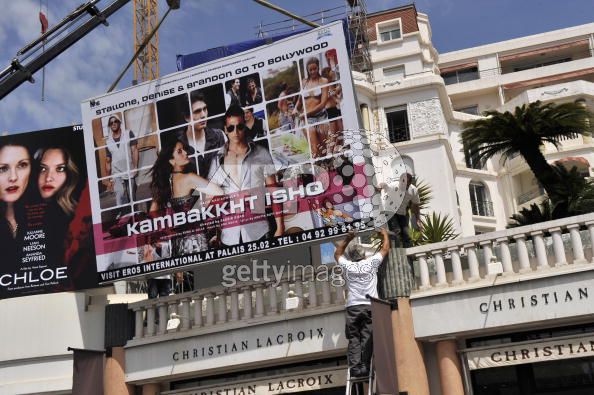
Over the last few years, films such as “Rang De Basanti”, “Rock On” and “Wake Up Sid” have been winning over urban multiplex audiences with their restraint and, at the other end of the spectrum, the soppy melodramatic “Saawariya”s and “Kambakkht Ishq”s have bombed at the box office.

Catering for whom?

As Karan Johar recently discovered, the twain don't seem to meet. Though the melodrama in the first half of “My Name is Khan” was muted to appeal to the West, the contrasting soppy second half came under fire from critics all over the world. But when the film collects 17 out of its 39 million dollars from the West, who do you really make a film for?

“My Name is Khan” epitomises that conflict with its half-hearted change in sensibility.

When Karan Johar brainstormed for titles for his “Stepmom” remake on Twitter, he realised that any Hindi sounding title made his film sound like a soap opera about motherhood.

More recently, the Roshans and Anurag Basu met with extremely polarised reviews to “Kites”. While most Indian critics and audiences thought it was too slow, the foreign press remained in awe of the genre-bender, applauding it for changing gears from drama to comedy to action to tragedy with its song and dance narrative and compared it with the flamboyance of Tarantino and Robert Rodriguez.

For long, melodrama has been the staple of Indian cinema but with urban centres getting more and more used to Hollywood and international fare, the tolerance levels for mush and corn has gone down significantly. Once celebrated for its sense of drama, Karan Johar and Sanjay Leela Bhansali today feel the heat from the new age brand of restraint from the likes of Anurag Kashyap, Farhan Akhtar and Nagesh Kukunoor.

While multiple-Oscar winning “Slumdog Millionaire” faced no such problem despite its in-your-face drama (apart from a segment of media calling it poverty porn), “Kites” has met with scathing reviews at home for being overly dramatic, cheesy and predictable. For the record, “Kites” collected Rs. 65 crore worldwide (with Rs. 30.5 crore at home) in its opening weekend. Now consider that the film was released in 2000 screens in India and 500 screens abroad. A more West-friendly shorter 90-minute-version of the 130-minute film presented by Brett Ratner, minus the song and dance, will release this week.

Though packaging the Indian form of drama with its song and dance glory may not always work (as “Kambakkht Ishq” demonstrated), it surely has altered the sense of morality depicted in Hindi cinema over the years.

While Karan Johar makes no big deal out of his hero marrying a divorced single mother of a teenager, Anurag Basu shows the bad guy going to bed with the heroine of the film without really making it seem like a big deal. Chastity that used to be a prerequisite for the heroine is not sacred anymore (maybe it does not apply to Barbara Mori because she's Mexican) as filmmakers attempt to keep it real for the West.

As Hindi cinema makes this jump from drama to restraint, where does that leave the rural Indian audience? Who is going to give them their monthly dose of a “Gadar” and “Wanted”, once filmmakers decide there's more money abroad?

And with the growing sensibility disconnect between city-based critics and the audience from the heartland of India, what really defines a good movie? Something that reaches out to a segment of audiences that bring in more money or something that entertains of a nation of hungry, cinema-crazy fans who have been born and brought up with melodrama.

With the global market opening up, Indian cinema is at the cusp of significant change — in form and content.

May 25, 2010

The Art of Bollywood: Ode to a pre-digital era in Indian film poster art

Alisha Patel spends an afternoon with Rajesh Devraj, co-author of "The Art Of Bollywood", absorbing the historical outline of Bollywood poster art from the silent movie era onwards

LINK

In "The Art Of Bollywood" authors Rajesh Devraj and Edo Bouman document the hand-painted movie posters that made Bollywood the love of the East and the fascination of the West. Devraj and Bouman successfully map a design history that extends over 70 years in their ode to one of India's most unique art forms. The book, which spans the silent era through to the 1980s and 1990s, covers a pre-digital time in Bollywood poster history.

The period from the 1920s to the 1990s was a time when Hindi cinema developed its own distinctive visual language and produced its most magnificent images. These images, both well-known and rare, grace the pages of a book that is unique in that the focus is original poster art, as differentiated from re-prints, re-release posters, and regional variations. The crudely lithographed copies that are all-too familiar have been excluded and instead the publication embraces many other great visuals created by authentic poster artists, such as old movie magazine ads and booklet covers.

TWITTERATI - Bollywood Stars & Tweets


“I wonder when we’re gonna get sick of Twitter,” tweeted Shruthi Haasan last week. Fans may be asking the same question, But given the celebrity traffic on the micro-blogging site, The singer-actress’s fraternity doesn’t seem to share her fatigue. If 67-year-old Amitabh Bachchan signed up this month with his first tweet reading: “hey baby !! I made it on twitter !!! Yeeaaaaaahhhh !!”,Then at age 78, Shammi Kapoor tweets all hours of the night and day. Ashton Kutcher to Abhishek Bachchan, Demi Moore to Deepika Padukone, Sean Penn to Shah Rukh Khan, Shane Warne to Sachin Tendulkar, Twitter is one starry, starry site. With minute-by-minute updates of who ate what for lunch, Who is having friends over for dinner and who is going on a fancy holiday, the private lives of the rich and famous are now just a mouse click away...

Why Twitter?


While their Hollywood counterparts had discovered the joys of Twitter some time ago, Bollywood stars have only just woken up to the power of 140 characters. “I am on Twitter because it gives me an opportunity and a platform to be able to share and voice my opinions on matters that concern me and like-minded people,” says Twitter poster-girl Gul Panag, one of the first from Bollywood to sign up. For Priyanka Chopra — whose love affair with Twitter started about six months ago — it represents “freedom of expression at its best”. “I love the interactivity of it and the fact that you get a pulse of what the world is thinking and doing, not just through your followers but also through the people you follow,” says the Dostana girl who refers to her followers as “Twitter Rockstars”.

The prospect of direct interaction with fans and the promise of instant feedback have prompted many celebrities to go tweet, tweet, tweet. “Twitter is almost like having a chat session with my followers on a regular basis. There is a reaction to every tweet I make, there’s feedback, suggestions, opinions and that’s what makes it so interesting. This happens as a one-on-one between my followers and me with no one in between, making it very real and honest,” says Priyanka.

Removing the mass media as a go-between, celebrities are getting their message out loud and clear. “Twitter works very well for the stars because it gives them an opportunity to connect with their fans directly and pass on, what they believe, is undistorted and undiluted information, and not have anyone cross-examine them for it,” says Bharathi Pradhan, The Telegraph columnist and editor of The Film Street Journal.

Not to mention the ego boost!

TWEET, TWEET, TWEET

Fans, of course, are lapping up all the attention. Which admirer wouldn’t love the chance to see private pictures posted online — without the chance of them being discredited as doctored? Genelia D’Souza and Priyanka Chopra have put up pictures of the sets they shoot on while Uday Chopra has posted clips of the food he eats! And then there is all that trivia. Did you know that Abhishek Bachchan listens to David Guetta all the time and is a die-hard Chelsea fan? Or that Sachin Tendulkar cherishes a guitar autographed by U2’s Bono? And that almost every other night, Paris Hilton talks about being in her pyjamas and cuddling her dog to sleep as she watches the latest episode of Glee?

The Q&A session with followers — started by Shah Rukh Khan and now aped by many — in which a fan can ask their idol any question directly, is another pop hit. How Shah Rukh met wife Gauri, how Arjun Rampal woos wife Mehr Jessia, what Hrithik Roshan is afraid of, which fan trait irritates Shahid Kapur the most… such is the substance of the chatter.

“I like reading about what Shah Rukh had for dinner and what Hrithik does when he is not shooting. It’s information that comes straight from the star and isn’t something that one gets to read in interviews. I am sure the followers love it,” says television presenter Gaurav Kapoor.

Celebrities are making the most of the direct channel of communication with the world. Filmmaker Shekhar Kapur recently apologised on Twitter to actor Anil Kapoor after learning that the Slumdog Millionaire man was miffed that Kapur had recommended him as a judge for a reality show. Tennis star Sania Mirza launched on Twitter a stout defense of Shoaib Malik in the days preceding their controversial marriage. Director Karan Johar even took on fellow filmmaker Priyadarshan after the latter alleged that the controversy surrounding Karan’s My Name Is Khan was a publicity stunt while Hrithik Roshan apologised to the media after losing his cool during a temple visit recently. “Why call a press conference and spend time and money when you can just log on to Twitter and put forth your point of view to millions in a minute?” asks adman Prahlad Kakkar.

WORK AT PLAY

But it isn’t only just fun and games for our celebs on Twitter. Most have discovered the power of the medium and are now using it extensively — sometimes directly, sometimes subtly — to promote themselves and their films. Shah Rukh and Hrithik became Twitter-active just when their biggies My Name Is Khan and Kites were up for release. Mallika Sherawat has been going “Hisssss” on Twitter for a year now. Posting (favourable) reviews of their films and retweeting gushing fan feedback is the done thing for the stars. “Through Twitter, they not only promote their own films but put in a good word for others too,” laughs Bharathi Pradhan. Case in point: In a recent tweet, Karan Johar described Kites as “outstanding” while a few months ago, Preity Zinta tweeted about Amitabh Bachchan’s abysmal Teen Patti being a “must-watch”!

Tollywood too has become tweet-smart. Filmmaker Aniruddha Roy Chowdhury is promoting his upcoming Ekti Tarar Khonje on Facebook and Twitter. “It’s free and reaches out to 5,000-10,000 followers in a few seconds,” he says. Director Aparna Sen joined Twitter just weeks before the release of her film The Japanese Wife and together with her actress-daughter Konkona Sensharma and actor Rahul Bose, they went all out to promote the film online.

If films are being promoted, then why should star-led brands be far behind? “My brand new electric pink sony cyber shot arriving tday!!yuummiiieeee....can’t wait!!” was a recent tweet from Deepika Padukone. If Genelia posts pictures from the sets of shoots for brands she endorses, then actor Dino Morea uses Twitter to promote his Cool Maal range of merchandise.

And who knows where the Twitter invasion will end? With the Net slowly moving in on every aspect of the entertainment space, Twitter was the chosen forum for the unveiling of the first look of Karan Johar’s I Hate Luv Storys, starring Imran Khan and Sonam Kapoor. “Twitter may have lower penetration than various other mass media but there is no denying its effectiveness,” says Kakkar. “Twitter has already begun to be a fit in the marketing plans of many films. But at this stage, it is an effective addition to a robust marketing plan and not a substitute for one,” adds Priyanka Chopra.

Final proof of celeb dependence on Twitter? Karan Johar and Anupam Kher have both requested their Twitter followers to suggest the titles for their upcoming films!

PRIVATE GOES PUBLIC

But is Twitter the cause of decay in celebrity mystique? “Too much accessibility to the star downs the wow quotient. When you invite easy feedback you become closer to criticism,” feels t2 columnist Mssssssir. Case in point: actress Celina Jaitley was recently abused by a follower when she tweeted about equal right for the gay community. “Stars are respected for their brand image. If you are just a click away from knowing what the star is doing, then the fan craze dwindles,” agrees Kakkar.

And there is such a thing as too much information. Holly star couple Ashton Kutcher and Demi Moore even communicate with each other (and flirt!) through Twitter!

Aniruddha Roy Chowdhury has a different viewpoint, though. “Shah Rukh tweeting about how he is spending time with his family will be interesting to most followers and might even help them realise the importance of family time at some level,” he says. “It’s a place for us all to share our lives and I tweet in that spirit. And since I am a private person by nature, I only tweet about things I am comfortable about sharing,” adds Priyanka.

Not everyone is comfortable with revealing all on Twitter. The makers of Anjaana Anjaani, Priyanka’s new film with Ranbir Kapoor, have made the stars sign a confidentiality agreement promising that they will not talk about the film on Twitter!

As Preity Zinta recently tweeted: “Sitting with some friends and they all think Twitter is dangerous!”

But it’s a danger that our stars are happy to flirt with — at least for now.